$58.99
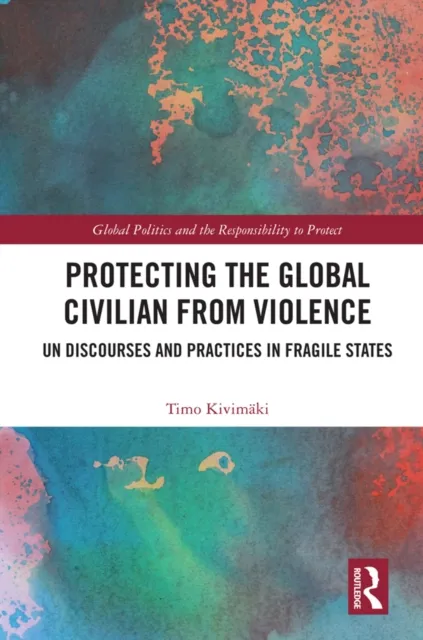
Protecting the Global Civilian from Violence
UN Discourses and Practices in Fragile States

Introduction
This book reveals why the UN is more successful than unilateral great powers in protecting civilians from violence, and focuses on the discourse, development and consequences of UN peacekeeping.
Analysis
Analysing statistics of state fragility and fatalities of violence, it reveals that the UN has managed to save tens of thousands of lives with its peacekeeping: a surprising statistic given the media consensus about the UN’s powerlessness and inefficiency. Using computer-assisted discourse analysis of resolutions from the UN Security Council, 1993-2019, the book offers data that describe the character and development of UN approach to the protection of civilians from violence. It then links the data to the statistics of conflict fatalities and state fragility to reveal, by means of qualitative and quantitative analysis, when, where, how and why the UN has been successful at protecting civilians.
Reasons for Success
Two reasons for the UN’s success are highlighted in the book as being statistically most significant. First, the organization offers local ownership to peaceful solutions by considering conflicting parties as the primary agents of protection. Second, the UN approach is much less power-oriented than unilateral approaches by the great powers: protection for the UN does not mean deterrence or destruction, but rather, support for local protectors of civilians. However, strong great power influence on such operations tends to weaken UN’s ability to save lives.
Target Audience
This book will be of much interest to students of humanitarian intervention, peacekeeping, human rights and International Relations in general.