$239.99
Prehistoric Warfare and Violence
Quantitative and Qualitative Approaches

Book Overview
This is the first book to explore prehistoric warfare and violence by integrating qualitative research methods with quantitative, scientific techniques of analysis such as paleopathology, morphometry, wear analysis, and experimental archaeology. It investigates early warfare and violence from the standpoint of four broad interdisciplinary themes: skeletal markers of violence and weapon training; conflict in prehistoric rock-art; the material culture of conflict; and intergroup violence in archaeological discourse. The book has a wide-ranging chronological and geographic scope, from early Neolithic to late Iron Age and from Western Europe to East Asia. It includes world-renowned sites and artefact collections such as the Tollense Valley Bronze Age battlefield (Germany), the UNESCO World Heritage Site at Tanum (Sweden), and the British Museum collection of bronze weaponry from the late Shang period (China). Original case studies are presented in each section by a diverse international authorship.
Historical Context and Research Approaches
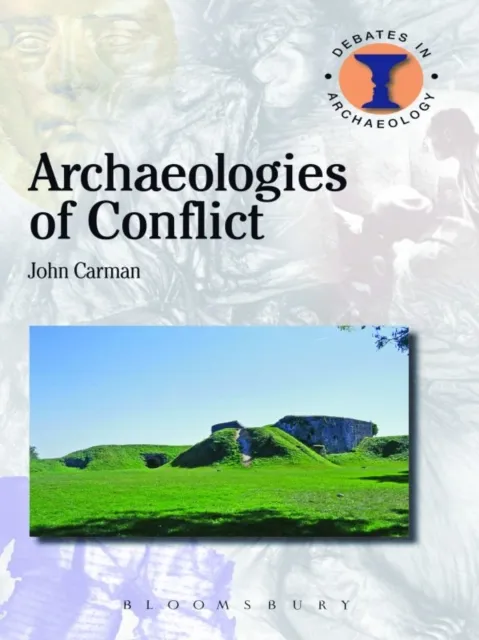
The study of warfare and violence in prehistoric and pre-literate societies has been at the forefront of archaeological debate since the publication of Keeley’s provocative monograph War Before Civilization (Oxford 1996). The problem has been approached from a number of standpoints including anthropological and behavioural studies of interpersonal violence, osteological examinations of sharp lesions and blunt-force traumas, wear analysis of ancient weaponry, and field experiments with replica weapons and armour. This research, however, is often confined within the boundaries of the various disciplines and specialist fields. In particular, a gap can often be detected between the research approaches grounded in the humanities and social sciences and those based on the archaeological sciences. The consequence is that, to this day, the subject is dominated by a number of undemonstrated assumptions regarding the nature of warfare, combat, and violence in non-literate societies. Moreover, important methodological questions remain unanswered: can we securely distinguish between violence-related and accidental trauma on skeletal remains? To what extent can wear analysis shed light on long-forgotten fighting styles? Can we design meaningful combat tests based on historic martial arts? And can the study of rock-art unlock the social realities of prehistoric warfare? By breaking the mould of entrenched subject boundaries, this edited volume promotes interdisciplinary debate in the study of prehistoric warfare and violence by presenting a number of innovative approaches that integrate qualitative and quantitative methods of research and analysis.