$24.99
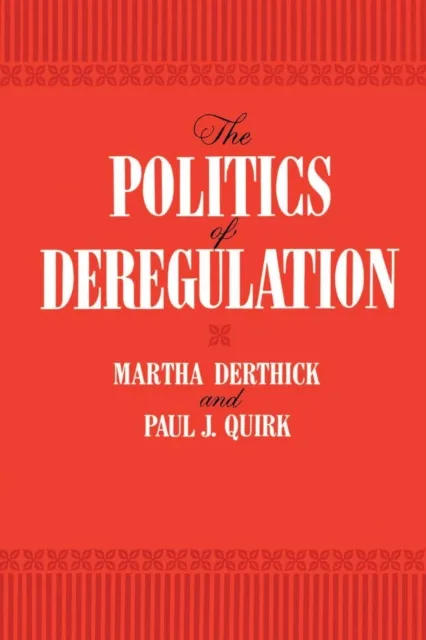
Politics of Deregulation

Introduction
The standard wisdom among political scientists has been that "iron triangles" operated among regulatory agencies, the regulated industries, and members of Congress, all presumably with a stake in preserving regulation that protected the industries from competition. Despite almost unanimous agreement among economists that such regulation was inefficient, it seemed highly unlikely that deregulation could occur.
Yet between 1975 and 1980 major deregulatory changes that strongly favored competition did take place in a wide range of industries. The results are familiar to airline passengers, users of telephone service, and trucking freight shippers, among others.
Questions and Focus
Martha Derthick and Paul J. Quirk ask why this deregulation happened. How did a diffuse public interest prevail over the powerful industry and union interests that sought to preserve regulation? Why did the regulatory commissions, which were expected to be a major obstacle to deregulation, instead take the initiative on behalf of it? And why did influential members of Congress push for even greater deregulation?
The authors concentrate on three cases: airlines, trucking, and telecommunications. They find important similarities among the cases and discuss the implications of these findings for two broader topics: the role that economic analysis has played in policy change, and the capacity of the American political system for transcending narrow interests.