$112.99
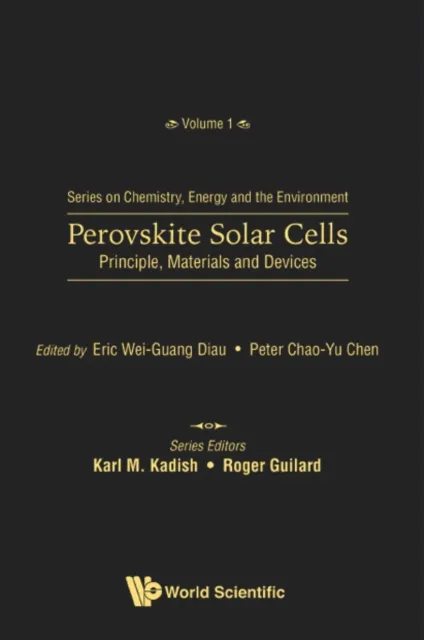
Perovskite Solar Cells: Principle, Materials And Devices

Energy and Climate Change
Energy and climate change are two of the most critical issues nowadays. These two topics are also correlated to each other. Fossil fuels are the main energy supplies that have been used in modern history since the industrial revolution. The impact of CO2 emission has been a major concern for its effect on global warming and other consequences. In addition, fossil fuels are not unlimited. Due to the increasing demands for energy supplies, alternative renewable, sustainable, environmentally friendly energy resources are desirable.
Solar Energy as an Alternative
Solar energy is an unlimited, clean, and renewable energy source, which can be considered to replace the energy supply of fossil fuel. The silicon solar cell is one of the dominant photovoltaic technologies currently, which converts sunlight directly into electric power with around 20% efficiency. This technique has been widely used in mainstream solar energy applications for decades, though the relatively energy-demanding production process remains with challenges to be resolved.
Emerging Photovoltaic Technologies
Recently, emerging photovoltaic technologies such as organometal halide hybrid perovskite solar cells have attracted tremendous attention due to their promising power conversion efficiencies (over 22%) and ease of fabrication. Their progress roadmap is unprecedented in photovoltaic history from the material development and efficiency advancement perspective. Beyond the rapid progress achieved in the last few years, it is expected that this novel technology will make an impact on the future solar cell market, provided long-term stability and Pb content issues are addressed. These challenges rely on a better understanding of materials and device function principles.
Scope of the Book
The scope of this book is to provide a collection of recent investigations, from fundamental processes and materials development to device optimization for perovskite solar cells.