$85.99
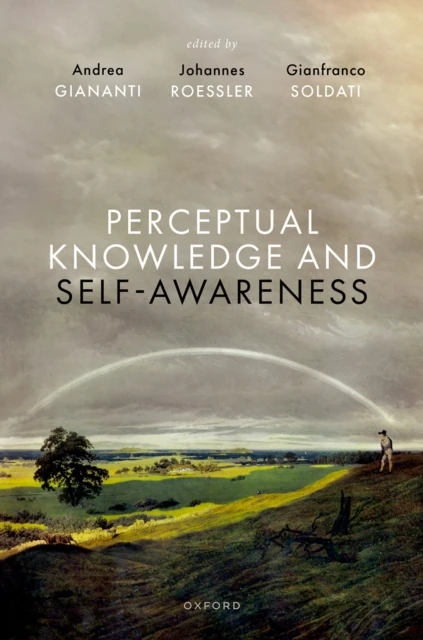
Perceptual Knowledge and Self-Awareness

Introduction
There is a tendency, in contemporary epistemology, to treat perceptual knowledge and self-knowledge as labels for different and largely unconnected sets of philosophical problems. The project of this volume is to bring out how much is to be gained from treating the two topics as, on the contrary, intimately connected.
Perceptual Knowledge and Its Directness
One set of questions that comes into view when we do concerns the sense in which perceptual knowledge, as understood from the first-person perspective, seem to be direct. In a famous passage, Austin contrasted reliance on what we call evidence with the way perceptual experience settles questions. How should we understand the difference? In what sense is perceptual knowledge direct, in contradistinction to evidence-based, inferential knowledge?
The Relationship Between Perception and Self-Consciousness
A connected set of issues has to do with the relationship between the epistemic authority of perception and self-consciousness. Is the way perceptual experience settles questions inherently manifest to the perceiver? Is a perceiver's awareness of (e.g.) seeing that p to be explained by reference to the very capacities at work in seeing that p? Or does it reflect the operation of some kind of second-order perceptual capacity?
The First-Person Perspective and Self-Knowledge
Consideration of these matters, in turn, prompts questions about the nature of the first-person perspective. I can see that p is a first-person self-ascription. But does it express the distinctively immediate kind of knowledge commonly labelled first-person self-knowledge? How would an affirmative answer to this question bear on a philosophical understanding of the first-person perspective?
Conclusion
These are rough indications of some of the ways in which reflection on the relationship between perceptual knowledge and self-awareness promises to shed valuable light on both topics.