$66.99
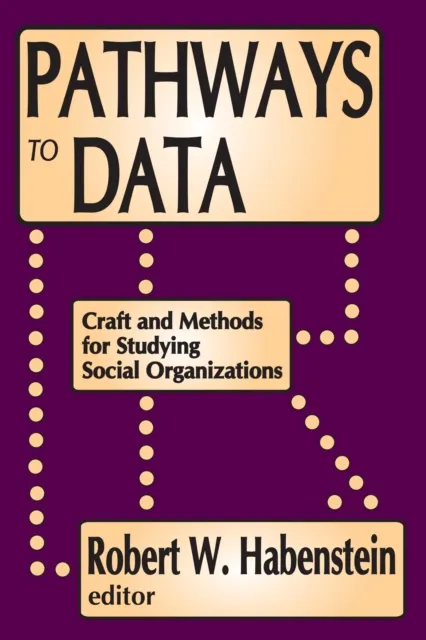
Pathways to Data
Craft and Methods for Studying Social Organizations

Introduction
"It is much better," observed C. Wright Mills in an essay on intellectual craftsmanship, "to have one account by a working student of how he is going about his work than a dozen codifications of procedure by specialists who often as not have never done much work of consequence." This observation underscores the premise of this book: that there is a need for students to communicate the procedures and strategies of field research they have found consequential in their own studies to the less instructed or less experienced.
The contributors to this book are well known researchers and share their field-developed techniques of research craftsmanship. The pathways to data they describe wind in a common direction, toward a concern with research happenings in situations: in agencies, associations, institutions, campaigns, demonstrations, and goal-directed social movements.
Content and Focus
The selections included in "Pathways to Data" are neither biographies of research projects nor subjective evaluations of personal experiences. Rather, the writers emphasize techniques, operations, and know-how. "Pathways to Data" chapters are collateral cousins to the collection of research biographies found in "Sociologists at Work", another classic in the field. But the lineage, or progression of thought, traces back to the Webbs' Methods of Social Study, and is most closely related to the Glaser and Strauss volume, The Discovery of Grounded Theory.
Research Philosophy
The contributors to this book reflect a common concern with organization in the "down home" sense of social bonds opening and closing, of self-involvement, and most importantly social structure. Process is stressed above system, becoming over being. Seen programmatically, field methods deliver data to concepts, and techniques are grounded in the heuristic value such data display. Theory is grounded in concepts validated by the effectiveness with which they give meaning to the data. The production of social knowledge is symmetrical, reciprocal, but analytically divisible. The student of society will consequently find an assortment of knowledges that makes large portions of our society more understandable.