$84.99
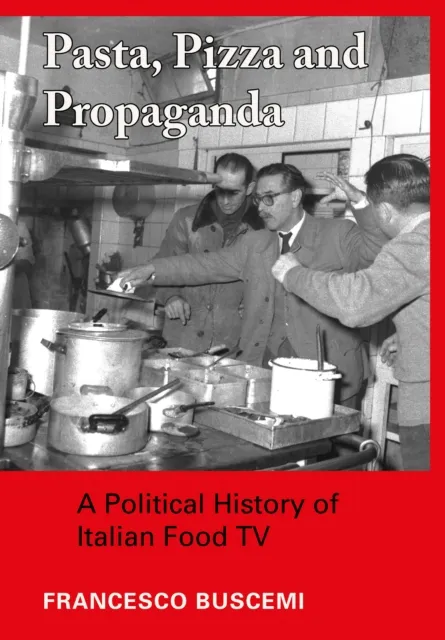
Pasta, Pizza and Propaganda
A Political History of Italian Food TV

Introduction
This book aims to develop a political history of Italian ‘good food’ on national television, and the central role of food in Italian culture. The focus is highly original and this is a unique interdisciplinary study at the intersection between food studies, media studies and politics.
The Protagonists
The three protagonists of Pasta, Pizza and Propaganda are food, television and politics. These are the three main characters that interrelate, collaborate and fight behind the scenes, while in front of the camera the writers, intellectuals and celebrity chefs talk about, prepare or taste the best Italian dishes.
Historical Overview
The book retraces the history of Italian food television from a political point of view: the early shows of the pioneers under strict Catholic control in the 1950s and 1960s, the left-wing political twist of the 1970s, the conservative riflusso or resurgence of the 1980s, the disputed Berlusconian era and the rise of the celebrity chefs, which, for better or for worse, makes Italy similar to the other western countries.
Food Television and Politics
The history of Italy since the mid-1950s is retold through the lenses of food television. This lively book demonstrates that cooking spaghetti in a TV studio is a political act, and tries to uncover how it is possible that, while watching on TV how to make pizza, we become citizens.
Target Audience
The primary readership will be an academic audience, including those in the disciplines of food studies, media studies, politics and Italian studies, as well as potentially for those interested in Italian sociology and anthropology. There may be a potential wider readership because of the popularity of Italian food and food television.