$63.99
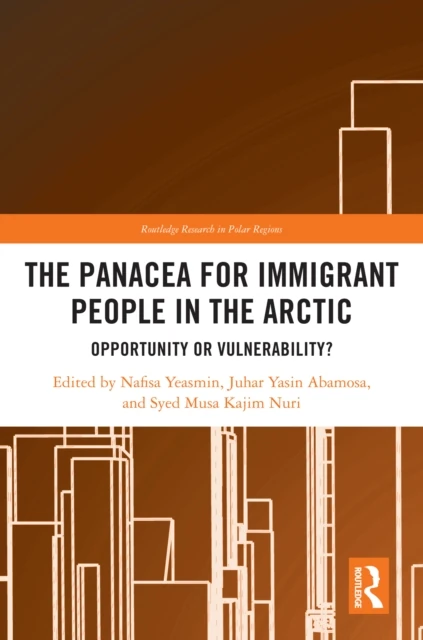
Panacea for Immigrant People in the Arctic
Opportunity or Vulnerability?

Overview
This book explores whether the Arctic serves as a true panacea for immigrants, offering opportunity and renewal, or if it reveals deep vulnerabilities, including isolation, harsh conditions, and exploitation. By examining the intersection of migration, socio-economic development, and climate change, the book uncovers the forces shaping immigrant lives and their role in the Arctic's evolving future.
Context and Significance
The arctic is one of the most rapidly changing regions on the planet. This book offers a deeper understanding of how immigration, changing environment, and socio-economic development intersect in the Arctic. It offers new insights into the challenges and opportunities facing immigrant communities and explores broader implications for regional policy, integration, and resilience.
Methodology and Perspectives
Drawing on multidisciplinary perspectives, from migration studies, environmental sociology, and development theory, the book combines empirical case studies, policy analysis, and narratives from immigrants themselves to present a grounded and comprehensive picture of Arctic migration dynamics. It provides insights on the real-world experiences and structural factors affecting immigrants in the Arctic, unpacking complex relationships between people, place, and policy.
Intended Audience
This book will be of interest to researchers and policymakers working in fields such as migration studies, political science, environmental studies, sociology, economics, and human geography. It will also be valuable for nonprofit organizations and advocacy groups focused on immigration rights, social justice, law, and human rights.