$192.99
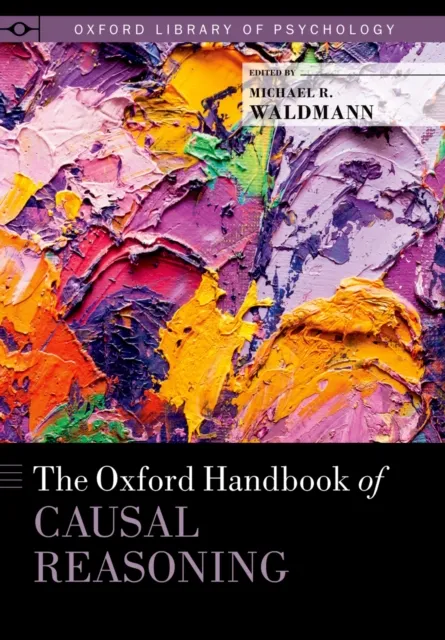
Oxford Handbook of Causal Reasoning

Causal reasoning and its importance
Causal reasoning is one of our most central cognitive competencies, enabling us to adapt to our world. Causal knowledge allows us to predict future events, or diagnose the causes of observed facts. We plan actions and solve problems using knowledge about cause-effect relations. Although causal reasoning is a component of most of our cognitive functions, it has been neglected in cognitive psychology for many decades.
The Oxford Handbook of Causal Reasoning
The Oxford Handbook of Causal Reasoning offers a state-of-the-art review of the growing field, and its contribution to the world of cognitive science.
Contents of the handbook
The Handbook begins with an introduction of competing theories of causal learning and reasoning. In the next section, it presents research about basic cognitive functions involved in causal cognition, such as perception, categorization, argumentation, decision-making, and induction. The following section examines research on domains that embody causal relations, including intuitive physics, legal and moral reasoning, psychopathology, language, social cognition, and the roles of space and time. The final section presents research from neighboring fields that study developmental, phylogenetic, and cultural differences in causal cognition. The chapters, each written by renowned researchers in their field, fill in the gaps of many cognitive psychology textbooks, emphasizing the crucial role of causal structures in our everyday lives. This Handbook is an essential read for students and researchers of the cognitive sciences, including cognitive, developmental, social, comparative, and cross-cultural psychology; philosophy; methodology; statistics; artificial intelligence; and machine learning.