$601.99
Origin and Growth of Towns

Environmental Sociology
Environmental sociology is typically defined as the sociological study of societal-environmental interactions, although this definition immediately presents the perhaps insolvable problem of separating human cultures from the rest of the environment. Although the focus of the field is the relationship between society and environment in general, environmental sociologists typically place special emphasis on studying the social factors that cause environmental problems, the societal impacts of those problems, and efforts to solve the problems.
Modern Social Work Methods
Modern social work employs three methods of assistance: case work, group work, and community organization. Case work is the method by which individual persons and families are assisted. The person in need of case work may be physically, mentally, or socially handicapped. Among those regarded as socially handicapped are: the unemployed, the homeless, members of broken families, alcoholics, drug addicts, and neglected or problem children. To determine the cause of maladjustment, the social worker must understand individual psychology as well as the sociology of the community. Physicians, psychiatrists, and other specialists may be required to help diagnose the difficulty.
Environmental Sustainability
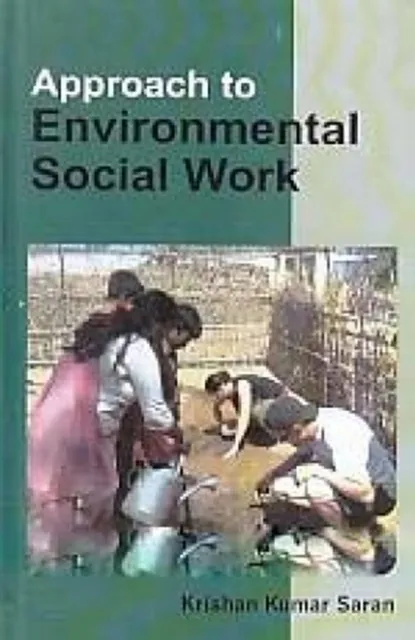
Environmental sustainability requires that "natural capital remain intact," meaning natural resources should not be used in excess of their rate of renewal. In addition, nonrenewable resources should be guarded and used minimally. It is here where the field of social work has been largely inactive. The book narrates environmental social work which would enliven and create an interest in historians, sociologists, anthropologists, students, researchers and layman alike.