£20.99
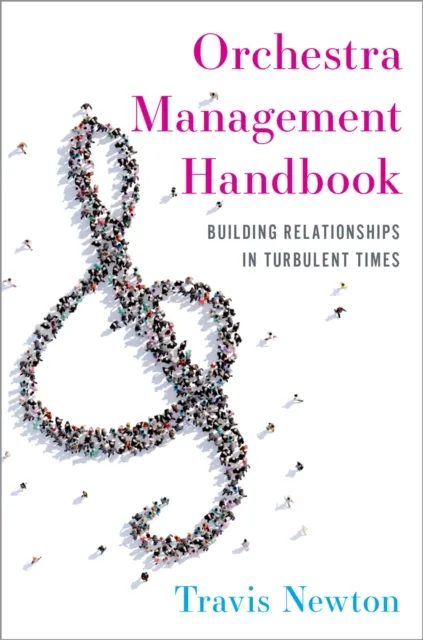
Orchestra Management Handbook
Building Relationships in Turbulent Times

Challenges in Orchestra Management
Those who choose to make the orchestra enterprise their life's work face a host of challenges that have beset orchestra managers since the very beginning of the art form, alongside new challenges that continue to arise in the twenty-first century.
The Orchestra Management Handbook
Written for those who are contemplating jumping into the orchestra management realm, the Orchestra Management Handbook will provide a significant head-start for people entering this complicated, exciting, and challenging line of work.
Building Relationships
Whether short-term, long-term, internal, external or existential, an intentional approach to building, maintaining, and sustaining relationships must be at the core of the orchestra manager's daily routine.
Few arts organizations have more potential for building community than orchestras. With a typically large permanent complement of artists, a high volume of performances, and a need for large audiences, building community should be central to the internal and external operations of the modern orchestra.
Practical Strategies and Resources
Each chapter of this handbook provides practical strategies, tools, and a variety of resources to workers in the orchestra management field, always with an emphasis on building relationships.
Throughout the book, author and experienced orchestra manager, violinist, and professor Travis Newton regularly features illustrative case studies highlighting innovative practices being undertaken at orchestras across the country, providing the reader an opportunity to learn from the experiences of others.
Additionally, each chapter concludes with a series of discussion questions to ponder, teasing out some of the key concepts.