$228.99
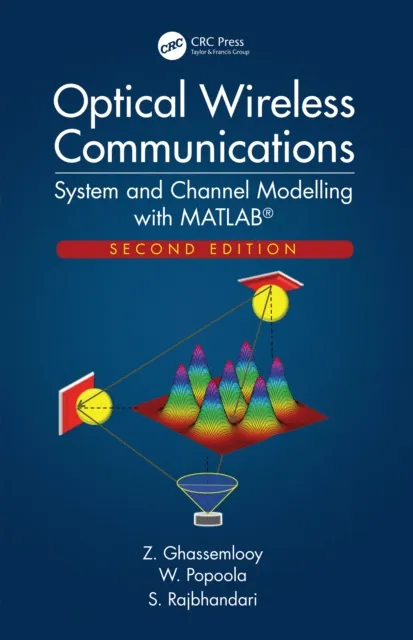
Optical Wireless Communications
System and Channel Modelling with MATLAB®, Second Edition

Introduction
The 2nd Edition of Optical Wireless Communications: System and Channel Modelling with MATLAB® with additional new materials, is a self-contained volume that provides a concise and comprehensive coverage of the theory and technology of optical wireless communication systems (OWC). The delivery method makes the book appropriate for students studying at undergraduate and graduate levels as well as researchers and professional engineers working in the field of OWC.
The book gives a detailed description of OWC, focusing mainly on the infrared and visible bands, for indoor and outdoor applications. A major attraction of the book is the inclusion of Matlab codes and simulations results as well as experimental test-beds for free space optics and visible light communication systems. This valuable resource will aid the readers in understanding the concept, carrying out extensive analysis, simulations, implementation and evaluation of OWC links.
Structure of the Book
This 2nd edition is structured into nine compact chapters that cover the main aspects of OWC systems:
• History, current state of the art and challenges
• Fundamental principles
• Optical source and detector and noise sources
• Modulation, equalization, diversity techniques
• Channel models and system performance analysis
• Visible light communications
• Terrestrial free space optics communications
• Relay-based free space optics communications
• Matlab codes.
A number of Matlab based simulation codes are included in this 2nd edition to assist the readers in mastering the subject and most importantly to encourage them to write their own simulation codes and enhance their knowledge.