$28.49
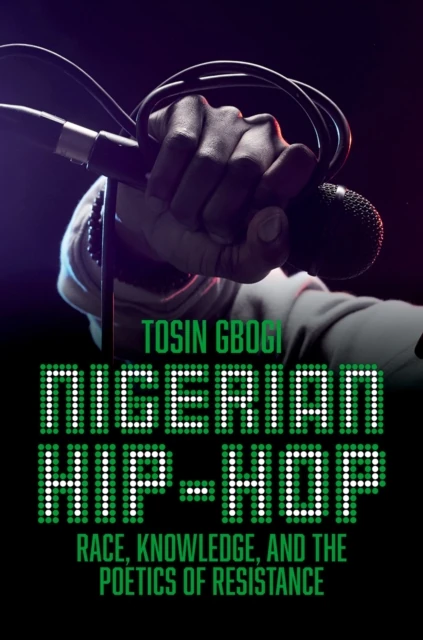
Nigerian Hip-Hop
Race, Knowledge, and the Poetics of Resistance

Introduction
Nigerian, or Naija, hip-hop has existed for close to 45 years, and throughout its rich history has been influenced by not only imperialist media flows but also enduring discourses of African anti-colonialism and pan-Africanism and the long cultural traffic between Africa and the African diaspora.
Culture and Analysis
In Nigerian Hip-Hop, Tosin Gbogi draws upon close readings of lyrics and other media and oral interviews with more than fifty artists to engage fully with the culture on its own terms, examining questions lying at the intersection of rap poetics, race, knowledge, and popular culture.
Troubling the conventional paradigm in which hip-hop in Nigeria stands squarely for imperialist machinery, he directs attention to the culture's provocative meditations on the afterlives of slavery and colonialism.
Gbogi tracks these meditations across a wide range of sources, including lyrics, music videos, cover arts, liner notes, photographs, social media, archival materials, and oral interviews.
Placing these sources in conversation with one another, he examines them closely for what they reveal about the contemporary trajectories of African popular culture and youth resistance.
Significance of the Study
The first comprehensive and systematic study of Nigerian hip-hop--one of the world's oldest and most vibrant of such scenes--this book attends to the literary forms, the density of ideas, historical encounters, ideological struggles, and the lively internal debates that have animated the culture for more than four decades.
In highlighting these, Gbogi engages with a broad array of topics and themes, including those having to do with race, ethnicity, class, gender, language, media and popular culture, youth cultures, and poetry.