$42.99
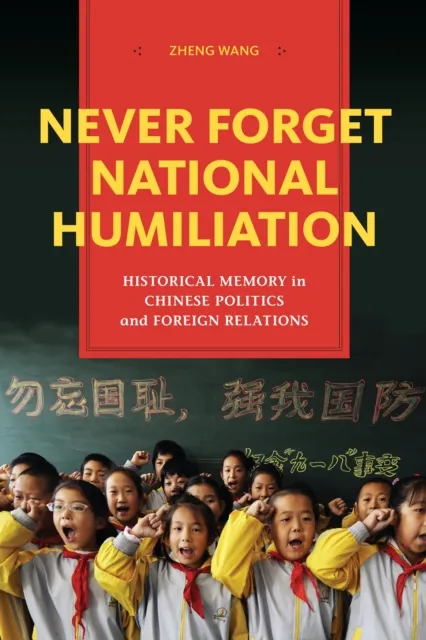
Never Forget National Humiliation
Historical Memory in Chinese Politics and Foreign Relations

Introduction
How could the Chinese Communist Party (CCP) not only survive but even thrive, regaining the support of many Chinese citizens after the Tiananmen Square crackdown of 1989? Why has popular sentiment turned toward anti-Western nationalism despite the anti-dictatorship democratic movements of the 1980s? And why has China been more assertive toward the United States and Japan in foreign policy but relatively conciliatory toward smaller countries in conflict?
Explanation of Trends
Offering an explanation for these unexpected trends, Zheng Wang follows the Communist government''s ideological reeducation of the public, which relentlessly portrays China as the victim of foreign imperialist bullying during "one hundred years of humiliation." By concentrating on the telling and teaching of history in today''s China, Wang illuminates the thinking of the young patriots who will lead this rising power in the twenty-first century.
Research and Approach
Wang visits China''s primary schools and memory sites and reads its history textbooks, arguing that China''s rise should not be viewed through a single lens, such as economics or military growth, but from a more comprehensive perspective that takes national identity and domestic discourse into account. Since it is the prime raw material for constructing China''s national identity, historical memory is the key to unlocking the inner mystery of the Chinese. From this vantage point, Wang tracks the CCP''s use of history education to glorify the party, reestablish its legitimacy, consolidate national identity, and justify one-party rule in the post-Tiananmen and post–Cold War era. The institutionalization of this manipulated historical consciousness now directs political discourse and foreign policy, and Wang demonstrates its important role in China''s rise.