$57.99
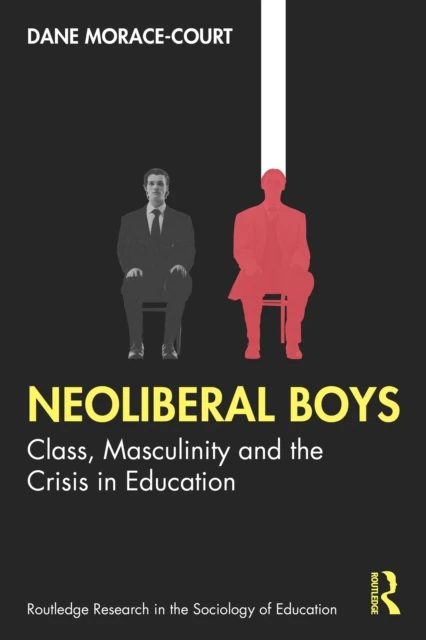
Neoliberal Boys: Class, Masculinity and the Crisis in Education

Introduction
This eminently timely volume offers a critical examination of the educational experiences of white working-class boys, interrogating the impact of neoliberal education policies, hegemonic masculinity and the increasing influence of digital culture on how they engage, or disengage, with schooling.
Methodology and Findings
Foregrounding the voices of young men compiled over five years through participant observation, semi-structured interviews, and a novel reflexive ethnographic data saturation cycle, the book challenges dominant narratives surrounding young, white working-class boys in education, positioning their disengagement as an outcome of intersecting structural inequalities, policy frameworks and shifting cultural narratives. As a result, the book explores how emerging hyper-masculine digital subcultures and a lack of school engagement have led many to seek status outside of formal education. Particularly focused on policy recommendations, the book speaks to international debates such as those in Australia, the United States and parts of Europe, around neoliberalism, educational exclusion and marginalised youth, offering comparative insights and global relevance despite its English empirical setting.
Theoretical Contributions
Offering a fresh, intersectional analysis of masculinity, class and educational inequality, the book will be of direct relevance to scholars, researchers and postgraduates in the field of the sociology of education, research methods in education, neoliberalism and education policy more broadly. Policy makers concerned with the influence of social media on young men in schools will also find value in the volume.