$78.99
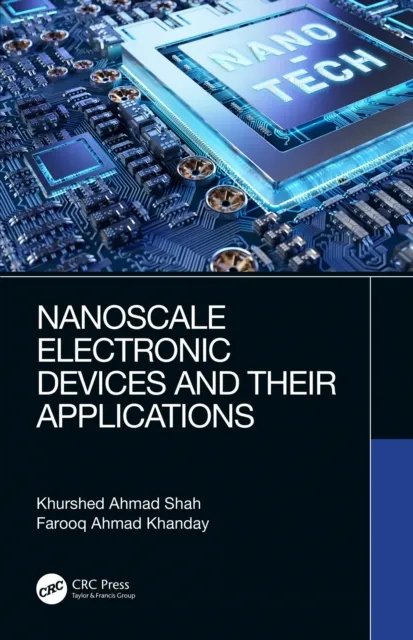
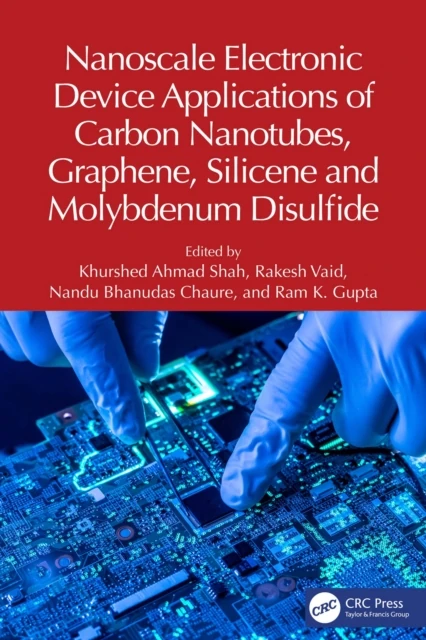
Nanoscale Electronic Device Applications of Carbon Nanotubes, Graphene, Silicene and Molybdenum Disulfide

Introduction
This book covers the latest advancements in the field of nanoelectronics using most popular low dimensional materials, namely carbon nanotubes (CNTs), graphene, silicene, and molybdenum disulfide (MoS2), that demonstrate how high electron mobility, quantum confinement effects, and low power consumption make them as essential substitutes for traditional silicon based devices in applications ranging from logic gates and memories to sensors and energy storage. Furthermore, the concepts discussed herein are crucial for realizing cutting edge fields like nanophotonics, nanoscale circuit design, and the hardware implementation of future technologies.
Topics Covered
This book introduces topics on the structure, properties, and applications of CNTs and 2D materials, including graphene, silicene, and MoS2. Presents the physical and electrical properties of nanoscale materials and modern applications of CNTs such as field effect transistors (FETs), biomedical applications, batteries, fuel cells, solar cells, energy storage, memory, metal-oxide-semiconductor field effect transistor (MOSFET), logic gates, circuits, and tunneling CNT FET.
Capacitors and Supercapacitors
Discusses the basic concepts and principles of capacitors and super capacitors, highlighting the advantages of carbonaceous materials for supercapacitor applications. Includes recent developments in carbonaceous material based hybrid supercapacitors, including the use of three dimensional (3D) architectures, the integration of carbonaceous materials with metal oxides and transition metal dichalcogenides (TMDs), and the development of flexible and wearable devices discussed in detail.
Applications of Graphene
Highlights diverse applications of graphene such as energy storage, supercapacitors, optoelectronics, biomedical engineering, and water purification. Special attention is given to its antibacterial activity, functionalization strategies, and role in next generation devices. Includes graphene FET (GFET) and different types of MOSFET structures pertaining to GFET and its applications. It also presents comparative studies to manifest its viability for integrated circuits. Highlights recent developments in the field of nanoscale devices based on graphene and silicene, such as biosensing and gas sensing, thermoelectric devices, and optoelectronic applications.
MoS2 and Related Technologies
Presents topics on spintronic devices, optoelectronic and photonic applications, sensing applications (gas, biosensors), lithium ion batteries, and MoS2-graphene composites. Discusses in detail the potential applications of MoS2 material to improve the performance of perovskite, copper indium gallium selenide (CIGS), cadmium telluride (CdTe), and organic solar cell devices. Provides significant insights into the potential role of MoS2 in advancing computational hardware and data storage technologies, thereby facilitating the development of more efficient and versatile electronic systems. Highlights the recent developments in MoS2 composites, electrochemical energy storage for supercapacitors, and symmetric, asymmetric/hybrid supercapacitor devices, along with a summary and future perspective.
Intended Audience
It is primarily written for senior undergraduates, graduate students, and academic researchers in the fields of physics, computer science, nanoelectronics, electrical engineering, electronics and communications engineering, nanoscience, and nanotechnology.