$25.49
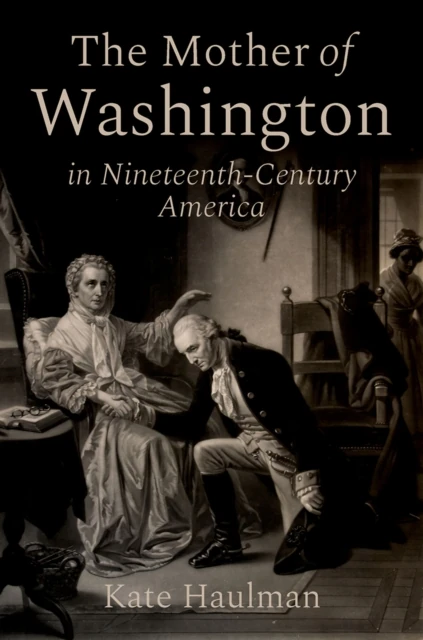
Mother of Washington in Nineteenth-Century America

In May 1894, President Grover Cleveland gave a speech thanking those who gathered "e;to worship at this national shrine."e;
He was not referring to the battlefields at Gettysburg or Antietam, nor to Mount Vernon, but to the gravesite of Mary Ball Washington, mother of George. While dedicating the new monument that marked it in Fredericksburg, Virginia, Cleveland honored "e;the woman who gave our Nation its greatest and best citizen."e; There could be no clearer valorization of eighteenth-century republican motherhood and its centrality to the nation's origin story.
The Mother of Washington in Nineteenth-Century America
examines the role of motherhood in the commemoration of the American Revolution by tracing the creation and evolution of the Mother of Washington figure. Kate Haulman explores the nineteenth-century memory of an eighteenth-century woman known for and through her famous son, the nation's first president. Underpinned by a canon of stories about Mary that often involved George, the monument and the figure it memorialized overlapped, sometimes in surprising and even paradoxical ways. In print, in images, and on the landscape, memorializing Mary foregrounded maternal ideals based in traditional gender roles and ancestry in the public memory of the nation's founding. As some women framed their engagement with the state in maternal terms, other men and women used the Mother of Washington to link the virtues she represented to the nation's origins. Women memorialists finally took up the cause to complete the monument, finishing what elite men had begun decades earlier.
Then as now, groups used the past to construct American motherhood, as well as using motherhood to engage with the founding past.
The Mother of Washington in Nineteenth-Century America offers fresh arguments about gender, race, and the politics of Revolutionary history and memory still contested 250 years later.