$145.99
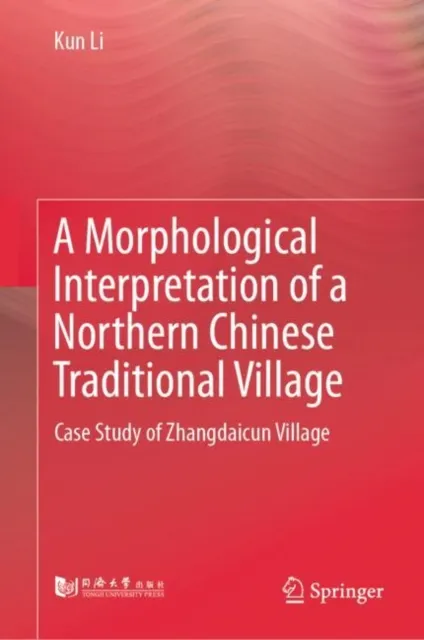
Morphological Interpretation of a Northern Chinese Traditional Village
Case Study of Zhangdaicun Village

Introduction
This book challenges the definition of a new approach for integrating protection and enhancing the Chinese heritage category of “Traditional Villages”. By applying a specific case study in the Hancheng context, Shaanxi Province, which lacks sound studies, the book formulates new theoretical prerequisites for future re-searches, an in-depth knowledge path, and sound methodological principles.
Methodology and Approach
By working in a multiple scales approach, the object of preservation and enhancement is first of all redefined in its ontology as a unity formed by the courtyard type, the morphology of the village, and the related landscape structures. All these three levels of study have been deeply investigated, put into the relationship and resulting in a new methodology which overcomes the inadequacy and ineffectiveness of the notion of “setting” deriving from conservation Charters, to embrace the structural notion of “context” and a knowledge approach to rural settlements’ form.
Innovative Features
The innovative and original features of this book are both in the reading villages in their landscape dimension, which in turn is studied as a context made of several interrelated structures. Another original feature of the book is the integration of Italian historic-structural and morphological methodologies with specific Chinese cultural aspects.
Interdisciplinary and Scientific Contributions
The author’s work dug deeply and interdisciplinary in all those dimensions to account for the complex issues that are related and embodied in both the physical and intangible meaning of human settlements, opening a novel scientific methodology for Chinese studies as a sound base to define three key integrated project actions: what, why, how to preserve, enhance, develop.