$98.99
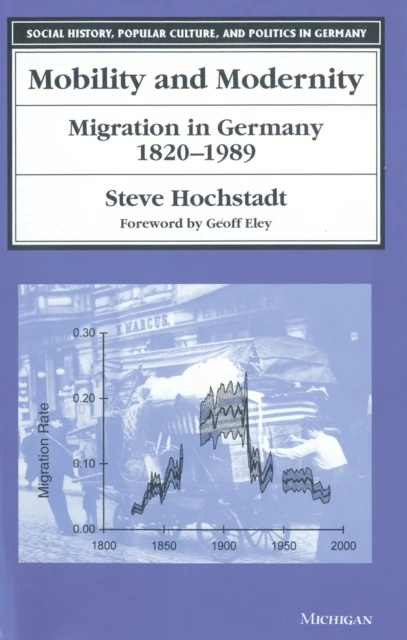
Mobility and Modernity
Migration in Germany, 1820-1989

Mobility and Modernity
uses voluminous German data on migrations over the past two centuries to demonstrate why conventional assumptions about the relationship between mobility and modernity must be revised.
Long-term Migration Data in Germany
Thus far the changing total volume of migration has not been traced over a long period for any country. Unique migration registration statistics, both detailed and broadly geographical in coverage, allow the precise plotting of migration rates in Germany since 1820. Steve Hochstadt combines careful quantitative methods, easily understood numerical data, and social analysis based upon broad reading in German social history to show that current beliefs about the direction and timing of changes in German mobility, which have been based on late nineteenth-century anxieties about urbanization and industrialization, do not match the data.
Migration Trends in Germany
Migration rates in Germany rose continuously throughout the nineteenth century, and have fallen during the twentieth century. Mobility, Hochstadt argues, was not an unprecedented accompaniment to industrialization, but a traditional rural response to specific economic changes. Hochstadt's more precise analysis of urban in- and outmigration shows the mechanism of urbanization to have been the migration of families rather than the much greater, but also more circular, migration of single men and women.
Significance of Historical Demography
Hochstadt demonstrates the importance of examining historical behavior, powerfully justifying the methods of historical demography as a path to social understanding. The data and specific conclusions are German, but the methods and reinterpretation of migration history have much wider application, both to other modern European nations and to currently developing countries. Those who study the modern social history of Europe, the mechanisms that formed urban working classes, and the methods of historical demography will be interested in Hochstadt's work.