£5.99
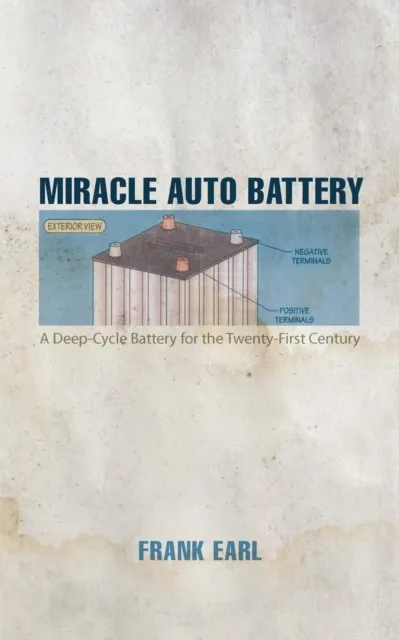
Miracle Auto Battery
A Deep-Cycle Battery for the Twenty-First Century

Introduction
With each passing day, the planet grows closer to peak oil, the point at which our ability to extract petroleum enters its terminal decline. Equally troubling is that our dependence on foreign oil has left us beholden to many of the most ruthless, most despotic nations on earth. Scientists have searched for alternative fuel sources, but even after decades of research, efforts to increase the efficiency and overall capacity of the deep-cycle battery for electric vehicles have been largely unsuccessful.
About the Book
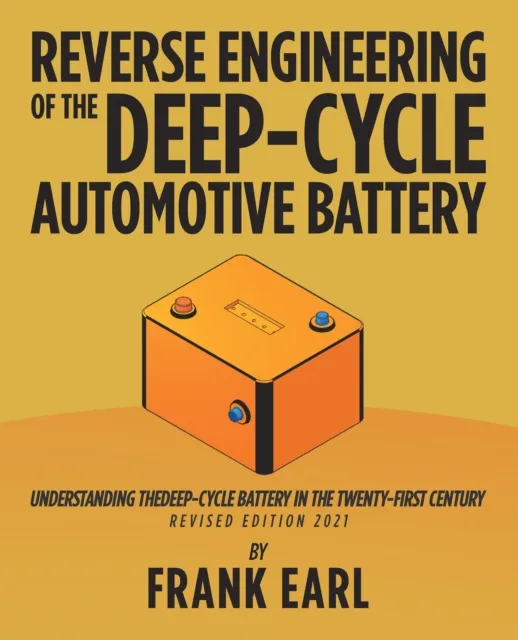
Miracle Auto Battery argues that we have simply been searching in the wrong place. Unlike much of the existing research into automotive battery technology that is preoccupied with the chemical structure of the battery, Miracle Auto Battery focuses on the mechanical structure of the deep-cycle battery. Author Frank Earl proposes that to unlock the future of battery technology, we may need to first look to the past.
Historical Background
In 1859, a French scientist named Gaston Plant combined a chemical and a mechanical solution to create the secondary cell (rechargeable) battery. Miracle Auto Battery suggests that by expanding on Plant's mechanical solution and adding an additional terminal to the secondary cell battery, we could simultaneously charge and discharge the battery—similar to a run capacitor in an AC circuit.
Implications and Questions
The ability to charge the deep-cycle battery at will would revolutionize the electric vehicle and end our dependence on foreign oil forever. Miracle Auto Battery is not just a book about a deep-cycle battery for the twenty-first century but it also raises questions about the traditional deep-cycle battery for electric vehicles today. If we can charge and discharge the same battery hundreds of times and the charge cycle is the reverse of the discharge cycle, why can't those in the field of automotive battery technology redesign the deep-cycle battery so it can power the electric vehicle beyond commute status without using fossil fuel or waiting hours to recharge?