$54.99
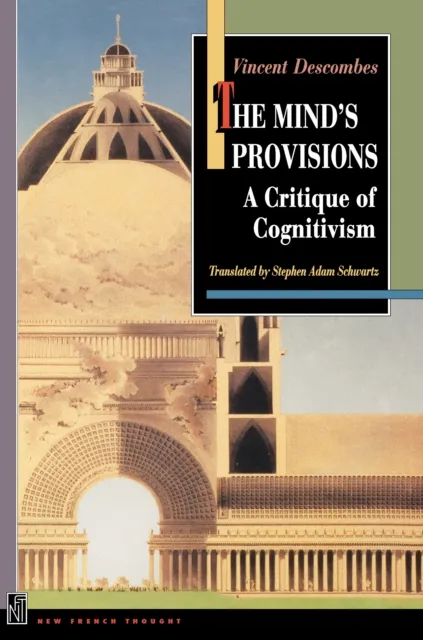
Mind's Provisions
A Critique of Cognitivism

Vincent Descombes brings together an astonishingly large body of philosophical and anthropological thought to present a thoroughgoing critique of contemporary cognitivism and to develop a powerful new philosophy of the mind.
Beginning with a critical examination of American cognitivism and French structuralism, Descombes launches a more general critique of all philosophies that view the mind in strictly causal terms and suppose that the brain--and not the person--thinks. Providing a broad historical perspective, Descombes draws surprising links between cognitivism and earlier anthropological projects, such as Lévi-Strauss''s work on the symbolic status of myths. He identifies as incoherent both the belief that mental states are detached from the world and the idea that states of mind are brain states; these assumptions beg the question of the relation between mind and brain.
In place of cognitivism, Descombes offers an anthropologically based theory of mind that emphasizes the mind''s collective nature. Drawing on Wittgenstein, he maintains that mental acts are properly attributed to the person, not the brain, and that states of mind, far from being detached from the world, require a historical and cultural context for their very intelligibility.
Available in English for the first time, this is the most outstanding work of one of France''s finest contemporary philosophers. It provides a much-needed link between the continental and Anglo-American traditions, and its impact will extend beyond philosophy to anthropology, psychology, critical theory, and French studies.