$64.99
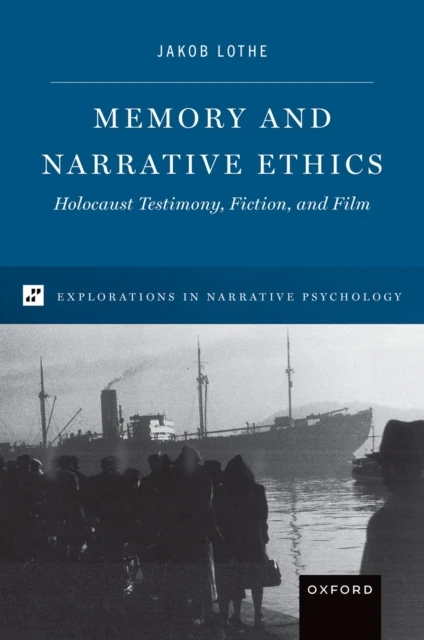
Memory and Narrative Ethics
Holocaust Testimony, Fiction, and Film

Introduction
This book explores how different forms of narrative maintain and extend our knowledge of the Holocaust at this critical moment in history, when the last survivors are passing away. It develops and uses an original approach that combines key aspects of narrative studies, memory studies, narrative ethics, narrative hermeneutics, and narrative psychology. The book shows that testimony, narrative fiction, and film play a key role in forming our individual and collective memory of Nazi Germany's mass murder of six million Jews. Inspired by narrative hermeneutics, these narrative analyses are linked to and supplement one another in a historicizing movement.
Testimonies and Films
After having discussed testimonies given by four Jewish women in Chapter 1, Chapters 2 and 3 analyze three nonfiction films, Leni Riefenstahl's Triumph of the Will (1935), Alain Resnais's Night and Fog (1956), and Claude Lanzmann's Shoah (1985).
Novels and Films
Chapters 4-7 discuss four novels and one film that, albeit in different ways and more or less directly, are framed and characterized by the historical event of the Holocaust: Jonathan Littell's The Kindly Ones (2006), Kazuo Ishiguro's The Remains of the Day (1989), James Ivory's film adaptation The Remains of the Day (1993), W. G. Sebald's Austerlitz (2001), and Jenny Erpenbeck's The End of Days (2012).
Conclusion
The interpretations demonstrate that written narratives and film narratives can be constructive responses to the ethical challenge of remembering the Holocaust.