$65.99
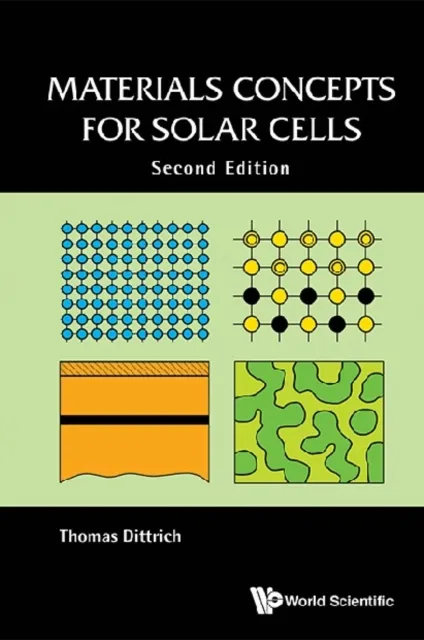
Materials Concepts For Solar Cells (Second Edition)

Introduction
A modern challenge is for solar cell materials to enable the highest solar energy conversion efficiencies, at costs as low as possible, and at an energy balance as sustainable as necessary in the future. This textbook explains the principles, concepts and materials used in solar cells. It combines basic knowledge about solar cells and the demanded criteria for the materials with a comprehensive introduction into each of the four classes of materials for solar cells, i.e. solar cells based on crystalline silicon, epitaxial layer systems of III-V semiconductors, thin-film absorbers on foreign substrates, and nano-composite absorbers. In this sense, it bridges a gap between basic literature on the physics of solar cells and books specialized on certain types of solar cells.
Recent Advances
The last five years had several breakthroughs in photovoltaics and in the research on solar cells and solar cell materials. We consider them in this second edition. For example, the high potential of crystalline silicon with charge-selective hetero-junctions and alkaline treatments of thin-film absorbers, based on chalcopyrite, enabled new records. Research activities were boosted by the class of hybrid organic-inorganic metal halide perovskites, a promising newcomer in the field.
Target Audience
This is essential reading for students interested in solar cells and materials for solar cells. It encourages students to solve tasks at the end of each chapter. It has been well applied for postgraduate students with background in materials science, engineering, chemistry or physics.