$3.29
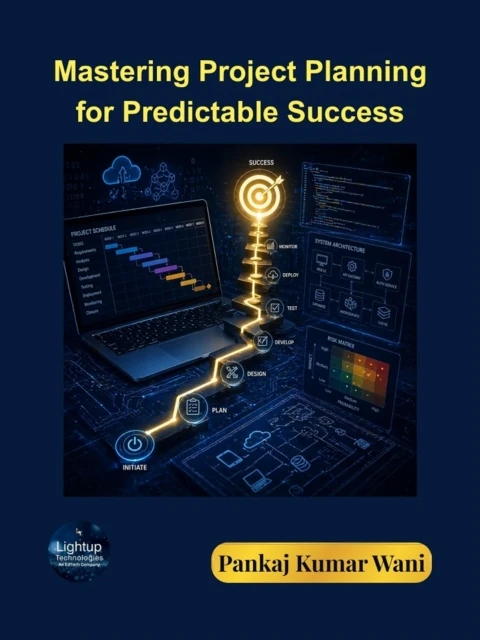
Mastering Project Planning for Predictable Success

Project Planning Overview
Project planning is the foundation of successful project execution and a critical discipline in today's dynamic business and organizational environments. Whether managing a small initiative or leading a large, complex project, effective planning provides the structure, direction, and control needed to transform ideas into measurable results.
Purpose of the Book
This book has been developed to provide readers with a practical and comprehensive understanding of project planning concepts, tools, and techniques that are essential for achieving project success. The purpose of this book is to guide students, professionals, project managers, and aspiring practitioners through the complete project planning journey—from initiating a project to closing it and conducting post-project reviews.
Strategic Approach to Planning
It presents project planning not merely as a technical process, but as a strategic approach that integrates scope, time, cost, quality, risk, resources, and stakeholder expectations into a unified roadmap for execution.
Organization of Content
The chapters in this book are organized to follow the natural progression of a project life cycle. It begins with the fundamentals by explaining what project planning is, how projects move through different life cycle phases, and the key concepts that form the basis of planning.
Key Topics Covered
It then explores how to identify project goals and objectives, engage stakeholders, develop project charters, and define project scope. These foundational topics help establish a clear vision and structure before moving into detailed planning.
Core Planning Processes
Subsequent chapters focus on creating Work Breakdown Structures (WBS), managing scope, developing schedules, using Gantt charts and network diagrams, planning resources, and applying time management techniques.
Financial Aspects
Financial aspects of project planning are also covered in depth, including cost estimation, budget development, and financial control, ensuring readers understand how to align project objectives with available resources.
Additional Planning Elements
Recognizing that successful projects require more than schedules and budgets, this book also addresses risk management, quality planning, procurement planning, and team building.
Execution and Control
Leadership, communication, execution strategies, monitoring techniques, performance measurement, and change management are presented as integral elements of maintaining control and driving project performance throughout execution.
Project Closure and Learning
The final chapters emphasize project closure and learning, covering project closing procedures, evaluation methods, and post-project reviews. These topics reinforce the importance of capturing lessons learned and continuously improving project outcomes.
Practical and Theoretical Balance
This book blends theoretical understanding with practical application, making it suitable for academic study as well as professional reference. Each chapter is designed to build progressively on previous concepts, enabling readers to develop both foundational knowledge and applied project planning skills.
Importance of Project Planning
In an era where organizations increasingly rely on projects to drive innovation and change, mastering project planning is more important than ever. It is our hope that this book will serve as a valuable guide, helping readers develop confidence, competence, and a structured approach to planning successful projects.
Conclusion
Welcome to the journey of mastering project planning.