$61.99
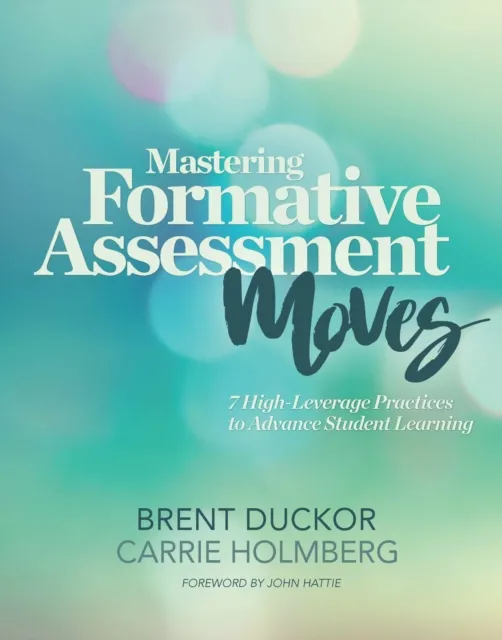
Mastering Formative Assessment Moves
7 High-Leverage Practices to Advance Student Learning

How do you know if students are with you at the beginning, middle, and end of a lesson? Can formative assessment offer a key to better teaching and learning during instruction? What if you could blend different formative assessment moves in your classroom, with intention and care for all students, to help make better instructional decisions on the fly and enjoy more teachable moments?
Educators Brent Duckor and Carrie Holmberg invite you on the journey to becoming a formative assessor. They encourage you to focus on these seven research-based, high-leverage formative assessment moves:
Priming
-- building on background knowledge and creating a formative assessment–rich, equitable classroom culture
Posing
-- asking questions in relation to learning targets across the curriculum that elicit Habits of Mind
Pausing
-- waiting after powerful questions and rich tasks to encourage more student responses by supporting them to think aloud and use speaking and listening skills related to academic language
Probing
-- deepening discussions, asking for elaborations, and making connections using sentence frames and starters
Bouncing
-- sampling student responses systematically to broaden participation, manage flow of conversation, and gather more “soft data” for instructional use
Tagging
-- describing and recording student responses without judgment and making public how students with different styles and needs approach learning in real-time
Binning
-- interpreting student responses with a wide range of tools, categorizing misconceptions and “p-prims,” and using classroom generated data to make more valid and reliable instructional decisions on next steps in the lesson and unit
Each chapter explores a classroom-tested move, including foundational research, explaining how and when to best use it, and describing what it looks like in practice. Highlights include case studies, try-now tasks and tips, and advice from beginning and seasoned teachers who use these formative assessment moves in their classrooms.