$59.99
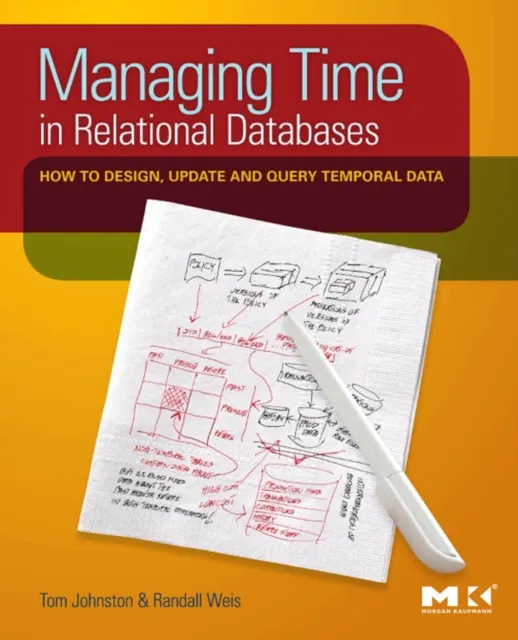
Managing Time in Relational Databases
How to Design, Update and Query Temporal Data

Managing Time in Relational Databases: How to Design, Update and Query Temporal Data
Introduces basic concepts that will enable businesses to develop their own framework for managing temporal data. It discusses the management of uni-temporal and bi-temporal data in relational databases, so that they can be seamlessly accessed together with current data; the encapsulation of temporal data structures and processes; ways to implement temporal data management as an enterprise solution; and the internalization of pipeline datasets.
The book is organized into three parts. Part 1 traces the history of temporal data management and presents a taxonomy of bi-temporal data management methods. Part 2 provides an introduction to Asserted Versioning, covering the origins of Asserted Versioning; core concepts of Asserted Versioning; the schema common to all asserted version tables, as well as the various diagrams and notations used in the rest of the book; and how the basic scenario works when the target of that activity is an asserted version table. Part 3 deals with designing, maintaining, and querying asserted version databases. It discusses the design of Asserted Versioning databases; temporal transactions; deferred assertions and other pipeline datasets; Allen relationships; and optimizing Asserted Versioning databases.
Integrates an enterprise-wide viewpoint with a strong conceptual model of temporal data management allowing for realistic implementation of database application development.
Provides a true practical guide to the different possible methods of time-oriented databases with techniques of using existing functionality to solve real world problems within an enterprise data architecture environment.
Written by IT professionals for IT professionals, this book employs a heavily example-driven approach which reinforces learning by showing the results of putting the techniques discussed into practice.