$210.99
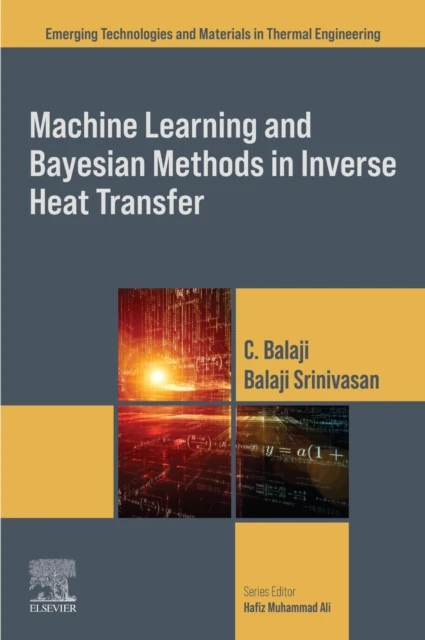
Machine Learning and Bayesian Methods in Inverse Heat Transfer

Machine Learning and Bayesian Methods in Inverse Heat Transfer
offers a comprehensive exploration of inverse problems in heat transfer, blending classical techniques with modern advancements in machine learning and Bayesian methods. This essential guide provides a hands-on approach with practical examples, making complex concepts accessible to readers seeking to deepen their understanding of this critical field.
The text covers essential topics including Introduction to Inverse Problems, Statistical Description of Errors and General Approach, Classical Techniques, Bayesian Methods, and a Machine Learning Approach to Inverse Problems. Readers will explore key concepts such as Gaussian distribution, linear and non-linear regression, Gauss-Newton algorithm, Tikhonov regularization, and more, gaining a solid foundation in applying these methods to real-world heat transfer scenarios.
For engineers, scientists, senior undergraduates, graduates, and researchers in heat transfer and related fields, this book serves as a vital resource. By offering clear explanations, practical examples, and MATLAB codes, it empowers readers to tackle inverse problems with confidence.
Whether readers are practicing engineers or graduate students specializing in heat and mass transfer, this book equips them with the tools and knowledge to excel and further advances in their field.
Highlights
Emphasizes a machine learning approach to solving inverse heat transfer problems
Provides detailed explanations of fundamental scientific concepts in a clear, precise manner
Integrates modern techniques with traditional methods to provide comprehensive understanding
Offers practical examples throughout, allowing readers to apply theoretical knowledge to real-world scenarios, enhancing learning and advancing interdisciplinary applications
Supports sustainability and responsible energy consumption -- especially UN SDGs 4, 7, 11, 12, 13, and 15 -- inverse heat transfer problems are important for researchers advancing efficient energy utilization