$42.99
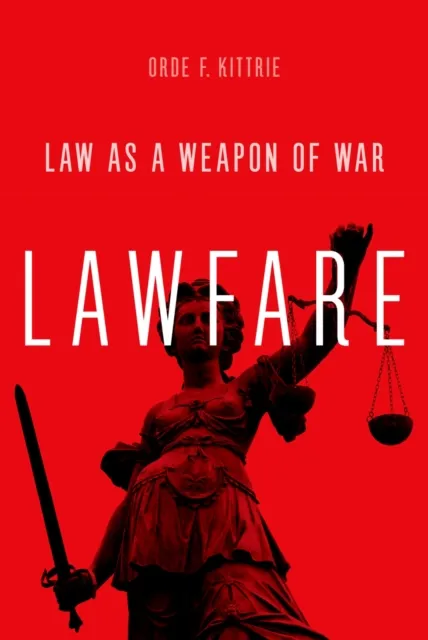
Lawfare
Law as a Weapon of War

Introduction to International Military Interventions
International military interventions endanger soldier and civilian lives, can be financially costly, and risk spiraling out of control. One incident which exemplified the risks involved a US and UK wish to stop a Russian ship from delivering helicopter gunships to the Assad regime in Syria in 2012. Forcibly intercepting a Russian ship in transit could have risked World War III, so they developed an alternative, non-confrontational maneuver: instead of military intervention, the UK persuaded the ship's insurer, London's Standard Club, to withdraw the ship's insurance. This loss of insurance caused the ship to return to Russia, thus avoiding an international clash as well as the delivery of deadly weapons to Syria.
The Concept of Lawfare
This use of legal maneuvering in lieu of armed force is known as lawfare and is becoming a critical tool in the foreign policy arena. In Lawfare, author Orde Kittrie draws on his experiences as a lawfare practitioner, US State Department attorney, and international law scholar in analyzing the theory and practice of lawfare. Kittrie explains how factors including the increased reach of international laws and tribunals and the rise of economic globalization and information technology have fueled lawfare's increasing power and prevalence.
Case Studies and Analysis
The book includes case studies of recent offensive and defensive lawfare by the United States, China, all sides of the Israeli-Palestinian conflict, and several non-governmental organizations and individuals. Kittrie asserts that much of the United States' most effective and creative lawfare today is being waged by private sector or other non-governmental attorneys. He analyzes why this is the case, and describes how such attorneys' expertise and experience can contribute even more to U.S. national security.
Implications and Future of Lawfare
Kittrie also explains that lawfare, deployed more systematically and adeptly by the U.S. government, could likely reduce U.S. and foreign casualties, and save U.S. taxpayer dollars, by supplementing or replacing the use of armed force as a tool for achieving some significant U.S. national security objectives. Understanding this alternative to armed force has never been more important.