$112.99
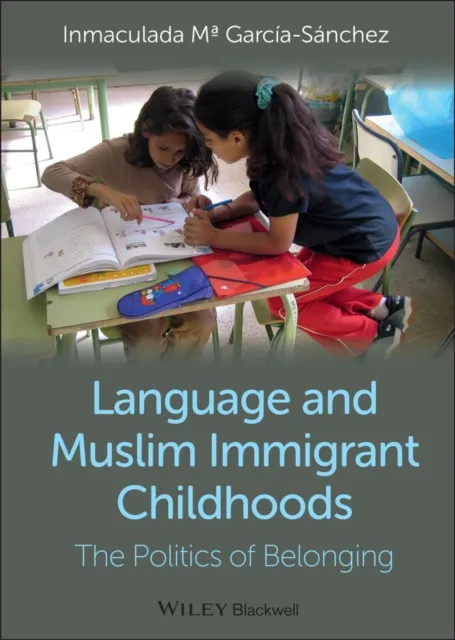
Language and Muslim Immigrant Childhoods
The Politics of Belonging

Language and Muslim Immigrant Childhoods
Documenting the everyday lives of Moroccan immigrant children in Spain, this in-depth study considers how its subjects navigate the social and political landscapes of family, neighborhood peer groups, and the institutions of their adopted country. García-Sánchez compels us to rethink theories of language and racialization by offering a linguistic anthropological approach that illuminates the politics of childhood in Spain’s growing communities of migrants. The author demonstrates that these Moroccan children walk a tightrope between sameness and difference, simultaneously participating in the cultural life of their immigrant community and that of a “host” society that is deeply ambivalent about contemporary migratory trends.
The author evaluates the contemporary state of research on immigrant children and explores the dialectical relations between young Moroccan immigrants’ everyday social interactions, and the broader cultural logic and socio-political discourses arising from integration and inclusion of the Muslim communities. Her work focuses in particular on children’s modes of communication with teachers, peers, family members, friends, doctors, and religious figures in a society where Muslim immigrants are subject to increasing state surveillance. The project underscores the central relevance of studying immigrant children’s day-to-day experience and linguistic praxis in tracing how the forces at work in transnational, diasporic settings have an impact on their sense of belonging, charting the links between the immediate contexts of their daily lives and their emerging processes of identification.