Currently not available in the United States
Korean Workers and Neoliberal Globalization

Introduction
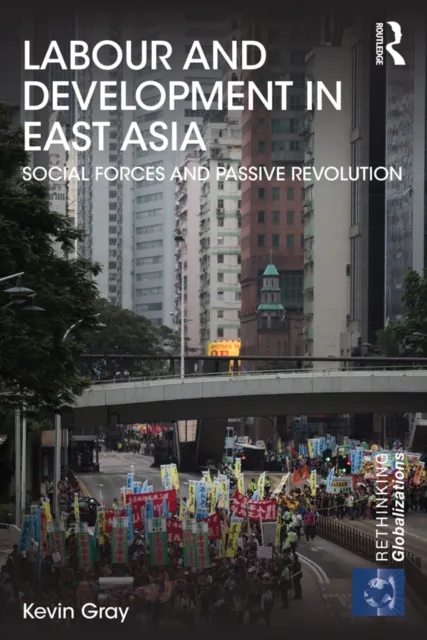
One of the most remarkable aspects of South Korea’s transition from impoverished post-colonial nation to fully-fledged industrialized democracy has been the growth of its independent and dynamic labour movement. Korean Workers and Neoliberal Globalisation examines current trends and transformations within the Korean labour movement since the 1990s.
Context and Analysis
It has been a common assumption that the ‘third wave’ of democratisation, the end of the Cold War, and the spread of neoliberal globalisation in the latter part of the 20th century have helped to create an environment in which organised labour is better placed to overcome bureaucratic national unionism and transform itself into a potential counter-globalisation movement. However, Kevin Gray argues that despite the apparent continued phenomena of labour militancy and the rhetoric of anti-neoliberalism, the mainstream independent labour movement in Korea has become increasingly institutionalised and bureaucratised into the new capitalist democracy. This process is demonstrated by the Korean Confederation of Trade Unions’ experience of participation in various forms of policy making forums. Gray suggests that as a result, the KCTU has failed to mount an effective challenge against processes of neoliberal restructuring and concomitant social polarisation.
Significance
The Korean experience provides an excellent case study for understanding the relationship between organised labour and globalisation. Korean Workers and Neoliberal Globalisation will appeal to students and scholars of Korean studies and International Political Economy, as well as Asian politics and economics.