$46.99
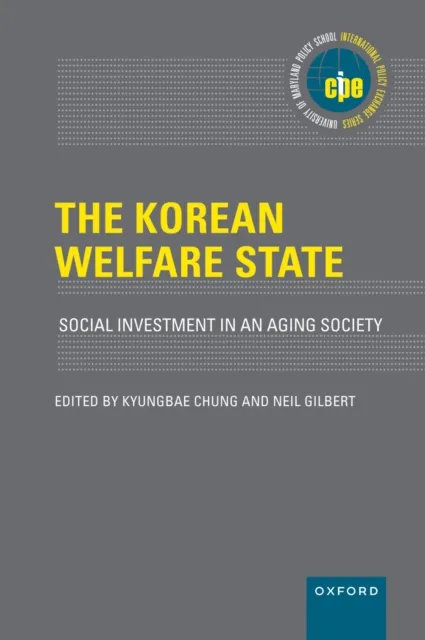
Korean Welfare State
Social Investment in an Aging Society

Introduction
The birth and remarkable expansion of Korean social welfare policy over the last several decades has taken place amidst the socio-economic burdens of a rapidly aging society.
This book surveys these developments through the analytic lens of the Social Investment State, under which contemporary policies have altered the essential character of the 20th century welfare states, which had provided a counterforce to capitalism.
In contrast, the Social Investment State is seen as backing policies designed to advance capitalism by promoting labor force participation, the growth of human capital, individual responsibility and economic development.
Structure of the Book
In examining the modern context and development of the Korean welfare state, this book is divided into three sections that focus on the socio-political evolution, the core policies of the Korean welfare state, and the contemporary policy challenges of Korea's aging society.
Section 1: Socio-Political Evolution
The first section traces the socio-political evolution of the Korean welfare state over the last three decades.
Section 2: Core Policies
The second section surveys the core policies of the Korean welfare state.
Section 3: Policy Challenges
The third section explores several key policy challenges encountered by the Korean approach to social investment as it seeks to address the demands of social protection in a rapidly aging society.
Conclusion
The volume concludes with a postscript that reviews the contemporary Korean discourse, which goes beyond the social investment state to the political interests in a universal basic income policy.