$8.29
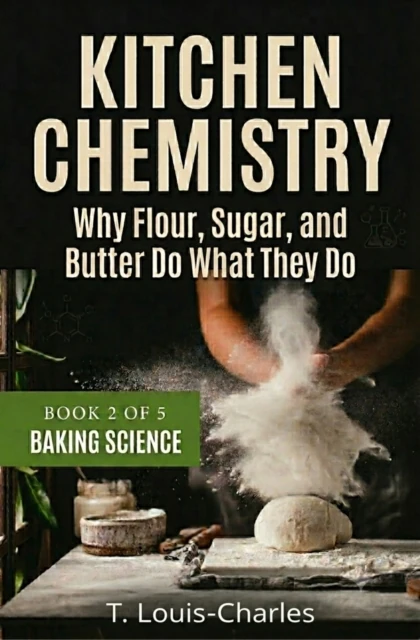
Kitchen Chemistry, Baking Science
Why Flour, Sugar, and Butter Do What They Do, Book 2 of 5

Every sunken cake, pale crust, and flat cookie has a scientific cause, and once you understand it you can fix it for good. This plain-English guide shows home bakers what flour, sugar, and butter are really doing so every bake turns out the way it should.Kitchen Chemistry, Baking Science: Why Flour, Sugar, and Butter Do What They Do is Book 2 of 5 in the Kitchen Chemistry series. It is a plain-English book for the home baker who has watched a cake sink in the middle, a bread bottom turn out pale, or a cookie come out cracker-thin and wanted to understand exactly what went wrong.The book opens with a single insight: baking is the most chemistry-like activity in a home kitchen. Once batter or dough enters the oven, the experiment is sealed. You cannot taste and adjust mid-bake. Every ratio set during mixing, every temperature of every ingredient, is already baked into the outcome. That sealing-in is not a flaw it is the process. Understanding what happens during mixing is the path to reliable baking.Readers learn the chemistry of flour and gluten development; the role of sugar as a tenderizer, sweetener, and moisture magnet; the way fats coat proteins to produce tender crumb; the structure-and-leavening function of eggs; and the four leavening systems (yeast, baking soda, baking powder, mechanical air) that lift cakes, cookies, breads, and pastries. They learn why cold butter, room-temperature butter, and melted butter produce completely different results from the same recipe and why a recipe's instructions are not interchangeable.By the final chapter, readers can read a baking recipe like a chemistry protocol: what each ingredient is doing, what ratios matter, what temperatures are critical, and what the oven will do once the door closes. The book is part of a broader Kitchen Chemistry series that treats the home kitchen as the most accessible laboratory anyone can own.