$90.99
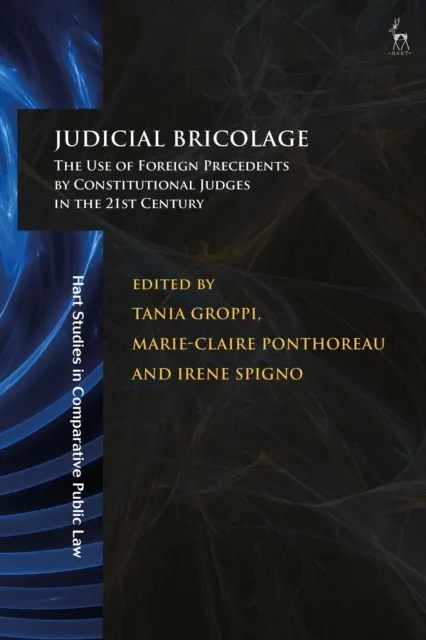
Judicial Bricolage
The Use of Foreign Precedents by Constitutional Judges in the 21st Century

Introduction
This book represents a unique contribution to comparative legal studies by presenting the results of an empirical research project on the use of foreign precedents in constitutional interpretation in 31 jurisdictions worldwide.
It expands and updates the outcomes presented in the previous successful book The Use of Foreign Precedents by Constitutional Judges, edited by Tania Groppi and Marie-Claire Ponthoreau and published in 2013 as Volume 1 of the series Hart Studies in Comparative Public Law.
Research Findings
This new research, covering countries from all the continents, with special attention to some of the emerging jurisdictions of the Global South, confirms that the practice of making explicit use of foreign precedents is still limited both quantitatively and qualitatively. Judicial dialogue only exists in common law jurisdictions and, even there, judicial bricolage is much more common than judicial comparativism. Since the previous edition, this practice has gone hand in hand with new developments in constitutional law, such as the democratic erosion and backsliding, the emergence of populist movements, the increasing role of regional human rights courts, which in many cases overshadowed foreign sources, and the end of a global vision of constitutionalism.
Methodology and Significance
Applying a quantitative and a qualitative analysis, with the support of tables and data, the book gives a more complete picture of the practice of citing foreign precedents in this new and challenging era, resulting in essential reading for comparative and constitutional legal scholars.