$131.99
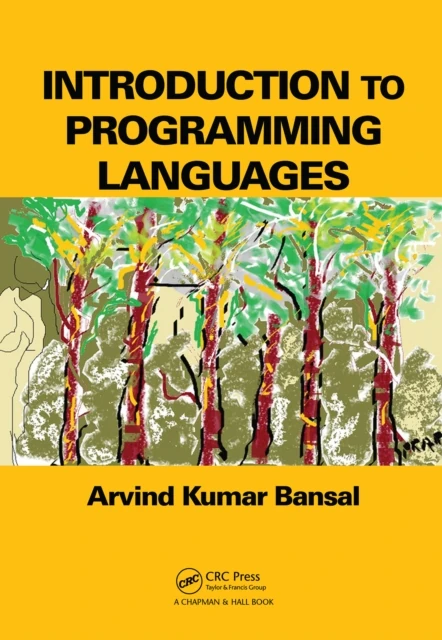
Introduction to Programming Languages

Introduction to Programming Languages
In programming courses, using the different syntax of multiple languages, such as C++, Java, PHP, and Python, for the same abstraction often confuses students new to computer science. Introduction to Programming Languages separates programming language concepts from the restraints of multiple language syntax by discussing the concepts at an abstract level.
Designed for a one-semester undergraduate course, this classroom-tested book teaches the principles of programming language design and implementation. It presents:
Features
Common features of programming languages at an abstract level rather than a comparative level
The implementation model and behavior of programming paradigms at abstract levels so that students understand the power and limitations of programming paradigms
Language constructs at a paradigm level
A holistic view of programming language design and behavior
Content
To make the book self-contained, the author introduces the necessary concepts of data structures and discrete structures from the perspective of programming language theory. The text covers classical topics, such as syntax and semantics, imperative programming, program structures, information exchange between subprograms, object-oriented programming, logic programming, and functional programming. It also explores newer topics, including dependency analysis, communicating sequential processes, concurrent programming constructs, web and multimedia programming, event-based programming, agent-based programming, synchronous languages, high-productivity programming on massive parallel computers, models for mobile computing, and much more. Along with problems and further reading in each chapter, the book includes in-depth examples and case studies using various languages that help students understand syntax in practical contexts.