$38.99
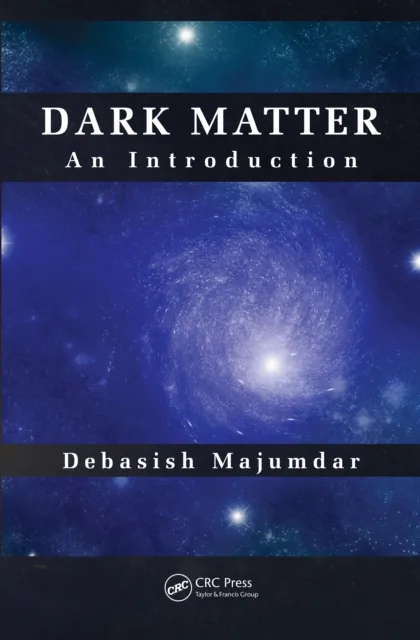
Introduction To Particle Dark Matter, An

What is the dark matter that fills the Universe and binds together galaxies?
Dark matter is a form of matter that does not emit, absorb, or reflect light, making it invisible to current electromagnetic observations. It is believed to constitute a significant portion of the total mass in the Universe, providing the gravitational glue that binds galaxies and influences the large-scale structure of the cosmos.
How was it produced?
The production mechanisms of dark matter are a subject of ongoing research. It is thought to have been produced in the early Universe through processes related to particle physics, such as thermal freeze-out or freeze-in, depending on the specific models. These processes involve particles that were once in thermal equilibrium with the hot plasma of the early Universe and later decoupled as the Universe expanded and cooled.
What are its interactions and particle properties?
Dark matter particles are hypothesized to have very weak interactions with ordinary matter and electromagnetic radiation. They are expected to be stable or have very long lifetimes. The exact particle properties remain unknown, but candidates include Weakly Interacting Massive Particles (WIMPs), axions, and other exotic particles. Their interactions are primarily gravitational, but some models suggest possible weak or other non-gravitational interactions.
Overview of the field
The paradigm of dark matter is a key development at the intersection of cosmology and elementary particle physics. It underpins the standard cosmological model and guides ongoing research in building and testing particle models for dark matter. This interdisciplinary approach involves analyzing questions, exploring research directions, and employing various methods, including experiments and observations.
Educational resources
Many resources, including problems and appendices, are available to aid understanding. These materials cover the basics of cosmology and particle physics necessary for a quantitative grasp of dark matter models. The field is relevant for graduate students, researchers, and professionals interested in the microscopic nature of dark matter, its detection, and its role in the Universe.