$40.99
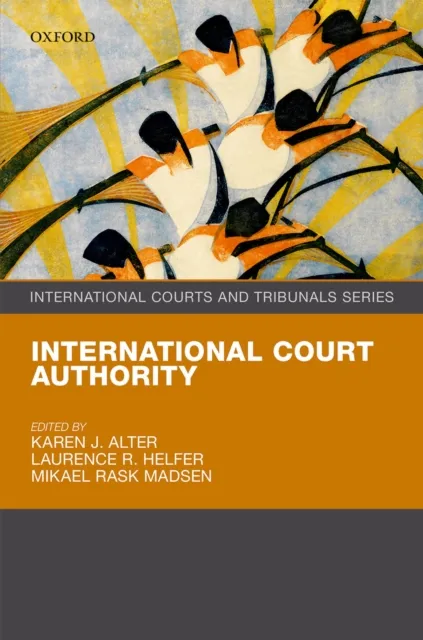
International Court Authority

Overview
An innovative, interdisciplinary and far-reaching examination of the actual reality of international courts, International Court Authority challenges fundamental preconceptions about when, why, and how international courts become important and authoritative actors in national, regional, and international politics. A stellar group of scholars investigate the challenges that international courts face in transforming the formal legal authority conferred by states into an actual authority in fact that is respected by potential litigants, national actors, legal communities, and publics.
Alter, Helfer, and Madsen provide a novel framework for conceptualizing international court authority that focuses on the reactions and practices of these key audiences. Eighteen scholars from the disciplines of law, political science and sociology apply this framework to study thirteen international courts operating in Africa, Latin America, and Europe, as well as on a global level. Together the contributors document and explore important and interesting variations in whether the audiences that interact with international courts around the world embrace or reject the rulings of these judicial institutions.
Alter, Helfer, and Madsen's authority framework recognizes that international judges can and often do everything they should do to ensure that their rulings possess the gravitas and stature that national courts enjoy. Yet even when imbued with these characteristics, the parties to the dispute, potential future litigants, and the broader set of actors that monitor and respond to the court's activities may fail to acknowledge the rulings as binding or take meaningful steps to modify their behaviour in response to them. For both specific judicial institutions, and more generally, the book documents and explains why most international courts possess de facto authority that is partial, variable, and highly dependent on a range of different audiences and contexts - and thus is highly fragile.
Introduction and Critical Reflections
An introduction situates the book's unique approach to conceptualizing international court authority within theoretical debates about the authority of global institutions. International Court Authority also includes critical reflections on the authority framework from legal theorists, international relations scholars, a philosopher, and an anthropologist. The book's conclusion questions a number of widely shared assumptions about how social and political contexts facilitate or undermine international courts in developing de facto authority and political power.