$118.99
Instrumental Analytical Chemistry
An Introduction

Analytical Chemistry and Instrumentation
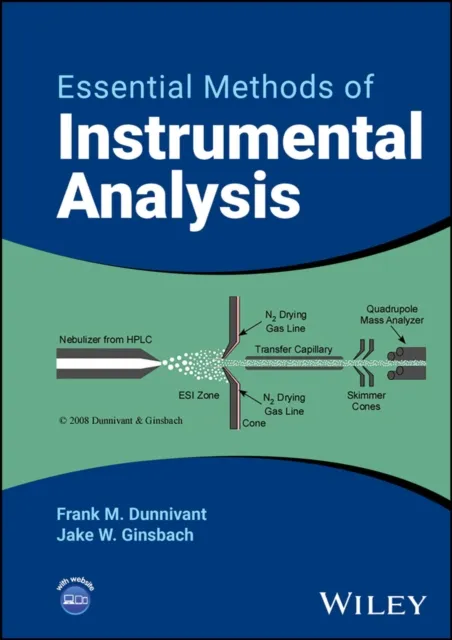
Analytical chemistry today is almost entirely instrumental analytical chemistry and it is performed by many scientists and engineers who are not chemists. Analytical instrumentation is crucial to research in molecular biology, medicine, geology, food science, materials science, and many other fields. With the growing sophistication of laboratory equipment, there is a danger that analytical instruments can be regarded as "black boxes" by those using them. The well-known phrase "garbage in, garbage out" holds true for analytical instrumentation as well as computers. This book serves to provide users of analytical instrumentation with an understanding of their instruments.
Purpose and Audience
This book is written to teach undergraduate students and those working in chemical fields outside analytical chemistry how contemporary analytical instrumentation works, as well as its uses and limitations. Mathematics is kept to a minimum. No background in calculus, physics, or physical chemistry is required. The major fields of modern instrumentation are covered, including applications of each type of instrumental technique.
Chapter Content
Each chapter includes:
A discussion of the fundamental principles underlying each technique
Detailed descriptions of the instrumentation
An extensive and up-to-date bibliography
End of chapter problems
Suggested experiments appropriate to the technique where relevant
Additional Features
This text uniquely combines instrumental analysis with organic spectral interpretation (IR, NMR, and MS). It provides detailed coverage of sampling, sample handling, sample storage, and sample preparation. In addition, the authors have included many instrument manufacturers’ websites, which contain extensive resources.