$77.99
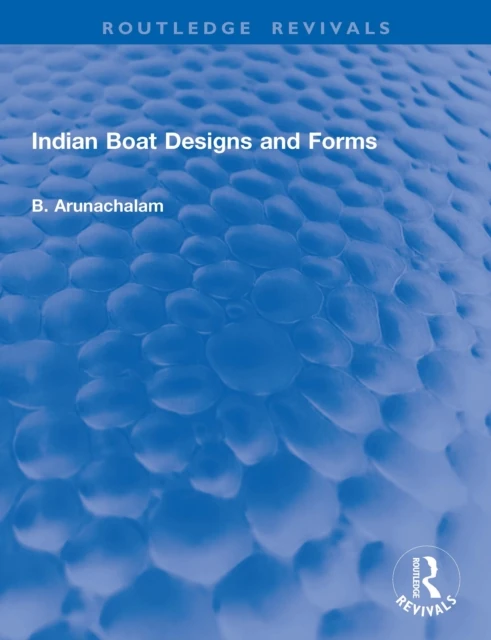
Indian Boat Designs and Forms

Maritime Activities Along the Indian Shores
Since the days of the Indus Valley Civilization, coastal regions along the Indian shores have been deeply engaged in maritime activities. Early watercraft used on the seas included reed boats, various types of floats, and the uniquely distinctive kattumarans, crafted by tying logs together. While these were simple wash-afloat vessels, more advanced boats based on the principle of air displacement emerged, such as dugouts and pseudo-dugouts. Over time, plank-built boats came into use. Initially keel-less, these boats evolved into sturdy keeled vessels as their size increased, enabling them to navigate sea waters more effectively.
Design and Regional Variations of Boats
The design and form of these boats varied regionally across different segments of the coast. Early on, planks were stitched together firmly, but in the last few centuries, nailed construction replaced stitching. Sails were introduced early, and steering mechanisms, such as outriggers and balance boards, were employed to manoeuvre the boats when needed. The choice of timber varied by region, influenced by its quality, durability, and strength to withstand the challenges of saline sea water. Over time, the boats grew in size, and by 1500 AD, Indian vessels reached impressive capacities of 1,000 tons or more. Some boats featured double-ended designs, while others had square, rounded, or transom sterns. Many were open-decked, but some included decks and cabins to accommodate passengers.
Skills and Craftsmanship in Boat Building
The intricacy of these boats’ designs and forms reflected the remarkable skills and expertise of master carpenters. What is particularly fascinating is that these master builders relied entirely on inherited wisdom and their own craftsmanship, without any drawn plans or formal architectural designs. First published in 2009, Indian Boat Designs and Forms brings together this rich knowledge of boat designs and forms, gathered through extensive fieldwork and supplemented by earlier writings. This book is an essential read for those interested in the evolution of maritime technology and the enduring legacy of Indian boat-building traditions.