$39.99
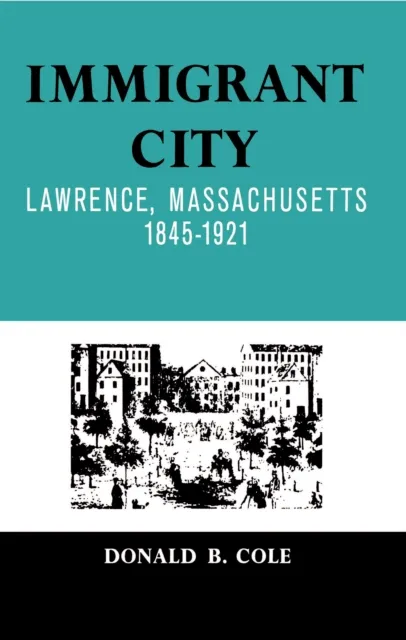
Immigrant City
Lawrence, Massachusetts, 1845-1921

The Industrial Workers of the World textile strike of 1912 in Lawrence, Massachusetts
The violence and radicalism connected with the Industrial Workers of the World textile strike of 1912 in Lawrence, Massachusetts, left the popular impression that Lawrence was a slum-ridden city inhabited by un-American revolutionaries. Immigrant City is a study of Lawrence which reveals that the city was far different.
The development of Lawrence
The book opens with an account of the strike of 1912. It then traces the development of Lawrence from the founding of the city in 1845, when its builders hoped to establish a model mill town, through its years of immigration and growth of 1912. Donald Cole puts the strike in its proper perspective by examining the history of the city, and he emphasizes the immigrant's constant search for security and explores the very important question of whether the immigrant, from his own point of view, found security.
The immigrant population of Lawrence
The population of Lawrence was almost completely immigrant in nature; in 1910, 90 per cent of its people were either first or second generation Americans, and they represented nearly every nation in the world. The period covered by the book--1845 through 1921--is the great middle period of American immigration, which began with the Irish Famine and ended with the Quota Law of 1921. While Immigrant City concentrates on one American city, it reveals much about American immigration in general and demonstrates clearly that, in spite of the poverty that most immigrants fought, life for the foreign-born in America was not as grim as some writers have suggested.