$56.99
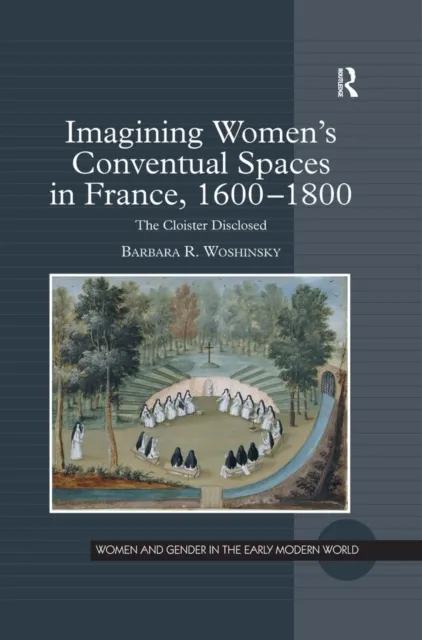
Imagining Women's Conventual Spaces in France, 1600,1800
The Cloister Disclosed

Blending history and architecture with literary analysis
This ground-breaking study explores the convent's place in the early modern imagination. The author brackets her account between two pivotal events: the Council of Trent imposing strict enclosure on cloistered nuns, and the French Revolution expelling them from their cloisters two centuries later. In the intervening time, women within convent walls were both captives and refugees from an outside world dominated by patriarchal power and discourses. Yet despite locks and bars, the cloister remained "porous" to privileged visitors. Others could catch a glimpse of veiled nuns through the elaborate grills separating cloistered space from the church, provoking imaginative accounts of convent life. Not surprisingly, the figure of the confined religious woman represents an intensified object of desire in male-authored narrative. The convent also spurred "feminutopian" discourses composed by women: convents become safe houses for those fleeing bad marriages or trying to construct an ideal, pastoral life, as a counter model to the male-dominated court or household.
Recent criticism and contributions
Recent criticism has identified certain privileged spaces that early modern women made their own: the ruelle, the salon, the hearth of fairy tale-telling. Woshinsky's book definitively adds the convent to this list.