$117.99
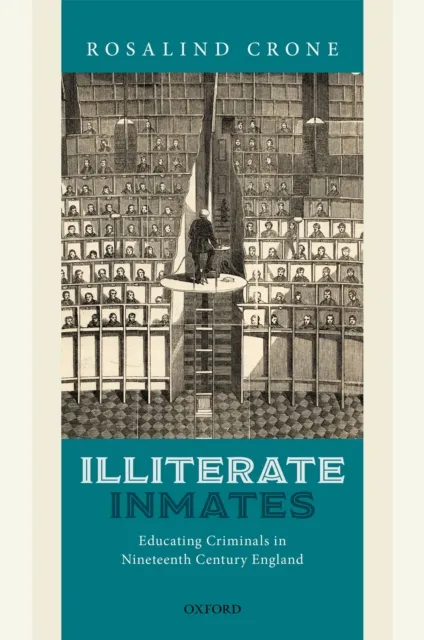
Illiterate Inmates
Educating Criminals in Nineteenth Century England

The nineteenth-century prison
we have been told, was a place of ''hard labour, hard board, and hard fare''. Yet it was also a place of education. Schemes to teach prisoners to read and write, and sometimes more besides, can be traced to the early 1800s. State-funded elementary education for prisoners pre-dated universal and compulsory education for children by fifty years. In the 1860s, when the famous maxim, just cited, became the basis of national penal policy, arithmetic was included by legislators alongside reading and writing as a core skill to be taught in English prisons. By c.1880 every prison in England used to accommodate those convicted of criminal offences had a formal education programme in which the 3Rs - reading, writing, and arithmetic - were taught, to males and females, adults and children alike. Not every programme, however, had prisoners enrolled in it.
Illiterate Inmates
tells the story of the emergence, at the turn of the nineteenth century, of a powerful idea - the provision of education in prisons for those accused and convicted of crime - and its execution over the century that followed. Using evidence from both local and convict prisons, the study shows how education became part of the modern penal regime. While the curriculum largely reflected that of mainstream elementary schools, the delivery of education, shaped by the penal environment, created an entirely different educational experience. At the same time, philosophies of imprisonment which prioritised punishment and deterrence over reformation undermined any socially reconstructive ambitions. Thus the period between 1800 and 1899 witnessed the rise and fall of the prison school in England.