$23.99
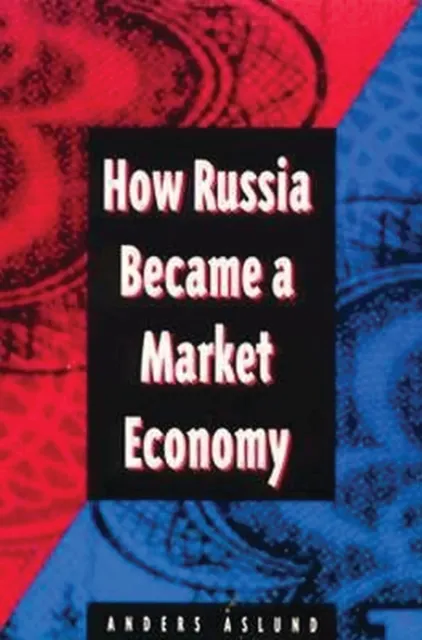
How Russia Became a Market Economy

Introduction
The breakup of the Soviet Union and the attempted transformation of Russia into a democracy and a market economy constitute one of the most significant events of our time. A transformation could hardly be greater, yet judgments vary from failure to substantial achievement. This book clarifies that Russia has actually become a market economy.
About the Author and Content
Anders Aslund provides the most detailed and insightful assessment to date of the Russian transformation from a socialist economy to a market economy. His account covers the period from the formation of the Russian reform government in November 1991 through the autumn of 1994. He discusses the preconditions of economic reform, the formation of a reform program, relations with other former Soviet republics, liberalization, macroeconomic stabilization, and privatization. The final chapter evaluates the transformation.
Expertise and Analysis
As a longtime specialist on the Soviet economy and an economic adviser to the Russian government during most of this period, Aslund analyzes the original intentions of the government, what they were able to accomplish, and why they fell short.
Conclusion
The book's general conclusion is that the greater the speed, consistency, and determination, the more impressive the results. The main threat to the reform process was the resistance from the state enterprise managers, who wanted to enrich themselves at the expense of the state. The reformers could only win if they acted swiftly and firmly. According to Aslund, the Russian transformation has not been too quick, as many maintain, but rather too slow.