$91.99
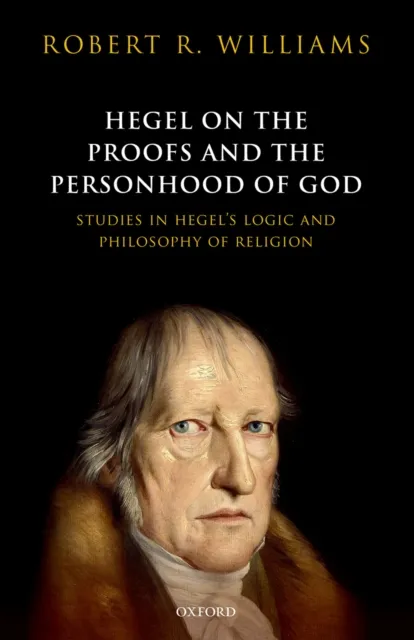
Hegel on the Proofs and the Personhood of God
Studies in Hegel's Logic and Philosophy of Religion

Hegel's Analysis of Nihilism and Modernity
Hegel's analysis of his culture identifies nihilistic tendencies in modernity i.e., the death of God and end of philosophy. Philosophy and religion have both become hollowed out to such an extent that traditional disputes between faith and reason become impossible because neither any longer possesses any content about which there could be any dispute; this is nihilism.
Hegel's Response: Ontological Argument and Ontotheology
Hegel responds to this situation with a renewal of the ontological argument (Logic) and ontotheology, which takes the form of philosophical trinitarianism. Hegel on the Proofs and the Personhood of God examines Hegel's recasting of the theological proofs as the elevation of spirit to God and defense of their content against the criticisms of Kant and Jacobi. It also considers the issue of divine personhood in the Logic and Philosophy of Religion.
The Issue of Divine Personhood and Hegelian Interpretations
This issue reflects Hegel's antiformalism that seeks to win back determinate content for truth (Logic) and the concept of God. While the personhood of God was the issue that divided the Hegelian school into left-wing and right-wing factions, both sides fail as interpretations. The center Hegelian view is both virtually unknown, and the most faithful to Hegel's project.
Unity in Difference and the Logic of the Concept
What ties the two parts of the book together—Hegel's philosophical trinitarianism or identity as unity in and through difference (Logic) and his theological trinitarianism, or incarnation, trinity, reconciliation, and community (Philosophy of Religion)—is Hegel's Logic of the Concept. Hegel's metaphysical view of personhood is identified with the singularity (Einzelheit) of the concept. This includes as its speculative nucleus the concept of the true infinite: the unity in difference of infinite/finite, thought and being, divine-human unity (incarnation and trinity), God as spirit in his community.