$36.99
$65.99
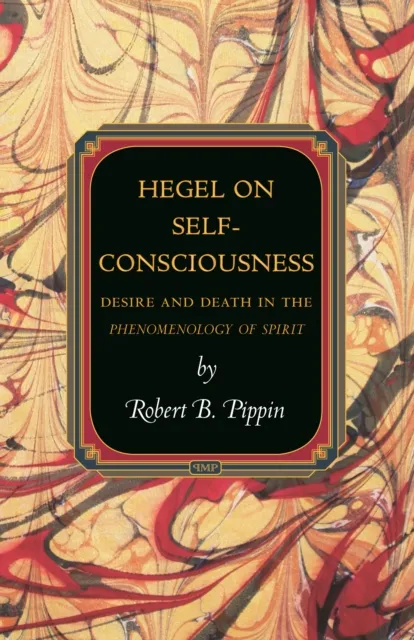
Hegel on Self-Consciousness
Desire and Death in the Phenomenology of Spirit

Introduction
In the most influential chapter of his most important philosophical work, the Phenomenology of Spirit, Hegel makes the central and disarming assertions that "self-consciousness is desire itself" and that it attains its "satisfaction" only in another self-consciousness. Hegel on Self-Consciousness presents a groundbreaking new interpretation of these revolutionary claims, tracing their roots to Kant's philosophy and demonstrating their continued relevance for contemporary thought.
Interpretation and Significance
As Robert Pippin shows, Hegel argues that we must understand Kant's account of the self-conscious nature of consciousness as a claim in practical philosophy, and that therefore we need radically different views of human sentience, the conditions of our knowledge of the world, and the social nature of subjectivity and normativity. Pippin explains why this chapter of Hegel's Phenomenology should be seen as the basis of much later continental philosophy and the Marxist, neo-Marxist, and critical-theory traditions. He also contrasts his own interpretation of Hegel's assertions with influential interpretations of the chapter put forward by philosophers John McDowell and Robert Brandom.