£129.50
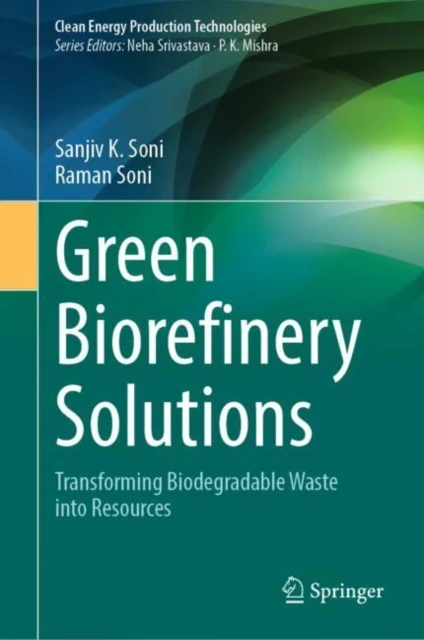
Green Biorefinery Solutions
Transforming Biodegradable Waste into Resources

Introduction to Biorefineries
This book delves into the innovative concept of biorefineries as a sustainable approach for managing biodegradable waste and producing valuable resources. It highlights the pressing need to address environmental challenges, such as waste accumulation and resource depletion while meeting the increasing demand for renewable energy and bio-based products.
Concept and Products of Biorefineries
The book introduces the concept of biorefineries, which are analogous to conventional oil refineries but focus on converting biomass and biodegradable waste into a range of high-value products. These products include biofuels, biochemicals, bioplastics, biofertilizers, and other materials that can replace fossil-derived equivalents.
Technological Pathways and Processes
The author explores various technological pathways and processes involved in efficiently transforming different types of biodegradable waste, such as agricultural residues, food waste, and organic byproducts, into usable resources. Readers are guided through the principles of biorefinery design, integration of various unit operations, and the optimization of conversion processes to achieve maximum resource utilization and minimal environmental impact.
Circular Economy and Benefits
The book emphasizes the importance of circular economy concepts, where waste is considered a valuable input rather than a burden. It also discusses the economic, social, and environmental benefits of adopting biorefinery solutions in different sectors, from agriculture to industry.
Target Audience and Impact
The book is a valuable resource for researchers, policymakers, industry professionals, and students interested in exploring innovative approaches to waste management, resource recovery, and the transition towards a more sustainable and circular bioeconomy. By highlighting the transformative potential of biorefineries, the book contributes to the ongoing dialogue on creating a more environmentally conscious and resource-efficient future.