$29.99
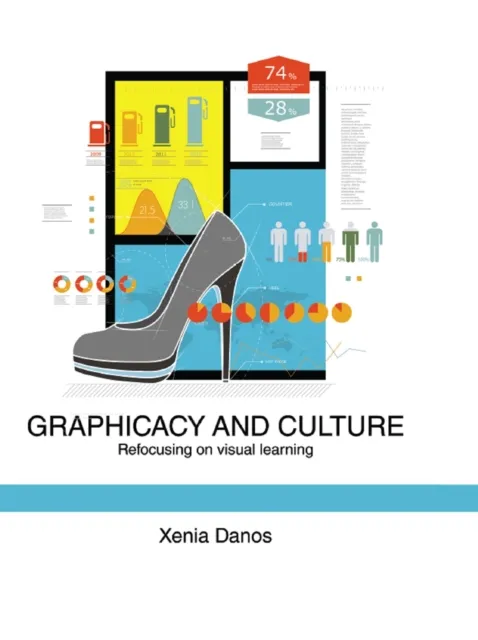
Graphicacy and Culture : Refocusing on Visual Learning
Refocusing on Visual Learning

INTRODUCTION: GRAPHICACY AND VISUAL CULTURE (Ken Baynes)
Graphicacy and cultural change, Continuities and change, Group graphics: them and us, The graphics of horror, Shaping the future: graphicacy and design, In conclusion.
CHAPTER ONE: GRAPHICACY AND EDUCATION
Introduction, What is graphicacy?, The international emergence of graphicacy, Typologies of graphicacy, Fry's taxonomy of graphs, Graphicacy within educational curricula, Graphicacy across the curriculum, Graphic representations of quantitative information, Computer aided images, Text based vs. text and image based information, Visual aids: advantages, Visual aids: disadvantages, Graphicacy in relation to literacy, Multiple intelligences and visual literacy, Chapter summary.
CHAPTER TWO: PROGRESSION AND DEVELOPMENT OF GRAPHICACY
Introduction, Development of graphicacy in children, Key authors, Children's drawing abilities by age group, Skills and abilities related to developmental stages, Piaget's theory of cognitive development in young children, Other perspectives, Drawing and mark-making, Children's responses to images, Nature Vs nurture, Nature, Nurture, Enhancing graphicacy capability, Analysis of advertising texts, Map related exercises, Atlas map work, Maps and symbolic representations, Gender differences, Chapter summary.
CHAPTER THREE: GRAPHICACY AND STUDENTS' LEARNING
Introduction, Skills required when dealing with graphicacy elements, Children's art as a mental test, Graphicacy tests developed in educational contexts, UK Associated Examining Board graphicacy test, Wilmot's graphicacy tests, Map-work related tests, Perceptual reasoning, Chapter summary.
CHAPTER FOUR: THE AFTERMATH
Introduction, Literature review outcomes, Summary of results, A research tool defining graphicacy in the curriculum, Validating the taxonomy, Chapter summary.
CHAPTER FIVE: CASE STUDIES
Design: Draigo learning clock(Adrian Draigo), Education: The visual challenges of teaching introductory university-level muscle physiology 1. Structure of a vertebrate skeletal muscle & The organizational hierarchy of functional morphology (Nicole Danos) 2. Thermodynamics (Nancy Aguilar-Roca), Dentistry: The application of images and pictures in dentistry (Anna-Maria Yiannikou, Education: Externalization of visual mental images through the medium of sketching (Diarmaid Lane, Niall Seery and Seamus Gordon), Medicine: the subconscious and conscious mind (Nikos Danos), Education: Drawing to learn: focus on the built environment (Eileen Adams, Psychotherapy: 'Memory Island' & Shadow Tableaux 1. 'Memory Island' - a virtual world populated by drawings 2. Shadow tableaux in nature reserves (Jennie Pedley), FINAL WORD, REFERENCES, ABOUT THE AUTHOR