$77.99
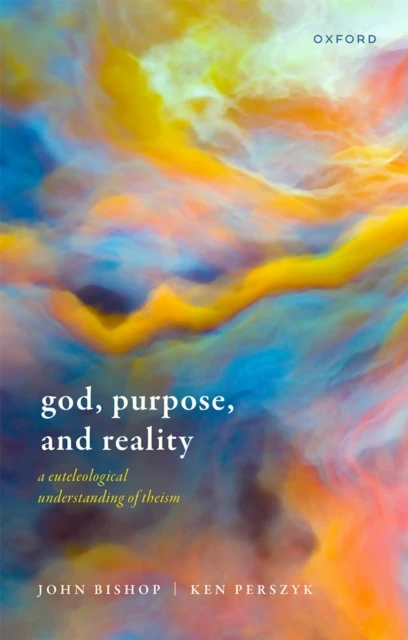
God, Purpose, and Reality
A Euteleological Understanding of Theism

What must reality be like if the God of Abrahamic theism exists?
How could the worldview of Abrahamic theism be understood if not in terms of the existence of a supremely powerful, knowledgeable, and good personal being?
Arguments against the standard conception of God
John Bishop and Ken Perszyk argue that it is reasonable to reject what many analytic philosophers take to be the standard conception of God as the personal omniGod. They argue that a version of a logical Argument from Evil is still very much in play, contrary to the widely held view that this line of argument is bankrupt.
The concept of euteleology
This book provides a new presentation and defence of the alternative that Bishop and Perszyk have called euteleology. Its core claims are that reality is inherently purposive, and that the Universe exists ultimately because its overall end (telos), which is the supreme good, is made concretely real within it.
Nature of God in euteleology
There is no supreme agent (standing by while horrors take place); God is no-thing in euteleology's basic ontology. Rather, talk of God-as-a-personal-being is a cognitive construction, treating ultimate reality by analogy with our ordinary ways of experiencing and talking about the world.
Realism and human engagement
But euteleological theism is also emphatically realist. Analogizing God-talk enables humans to align themselves with reality and is aptly deployed in prayer and worship-practices whose broad function is a human contribution to, and enjoyment of, the fulfilment of reality's inherent ultimate purpose.