$63.99
Goals and Values in Physical Education
A Focus on the Affective Domain

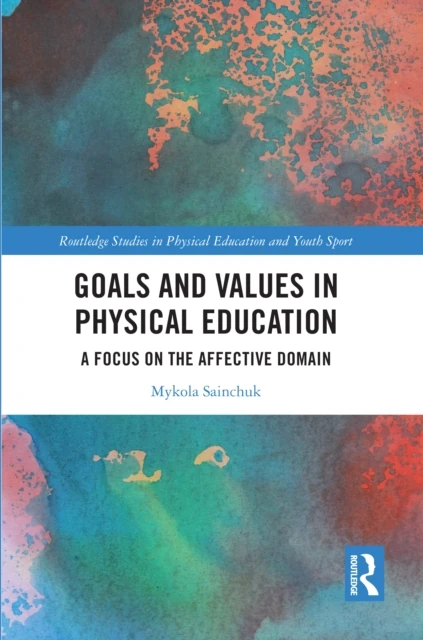
Goals and Values in Physical Education
This book explores the fundamental goals and values of physical education through an examination of philosophical ideas, meanings, and the critical relationship between educational objectives and underlying value systems.
The work addresses longstanding and often overlooked challenges in physical education, including its marginalisation, the neglect of philosophical foundations, and the exclusion of emotional and affective functions from pedagogical practice. The author moves beyond problem identification to analyse two fundamental factors, philosophy and geopolitics, that shape physical education's internal agenda across different cultural contexts. Drawing on extensive historical examples and empirical data from multiple countries, the book introduces the innovative concept of "kinaesthetic pleasure" as a key component of the affective domain. This theoretical framework is supported by practical evidence gathered through student interviews and classroom observations. The methodology combines philosophical analysis with empirical research to demonstrate how emotions and feelings can be systematically integrated into physical education through specialised pedagogical approaches, including the pedagogies of affect and embodiment.
Goals and Values in Physical Education will appeal to postgraduate students, academics, and researchers in physical education, sports pedagogy, educational philosophy, and curriculum studies. It will also be valuable for historians examining 20th-century Soviet physical education and sports, as well as practising physical education teachers seeking to enhance their pedagogical effectiveness through affective domain integration.


