$22.49
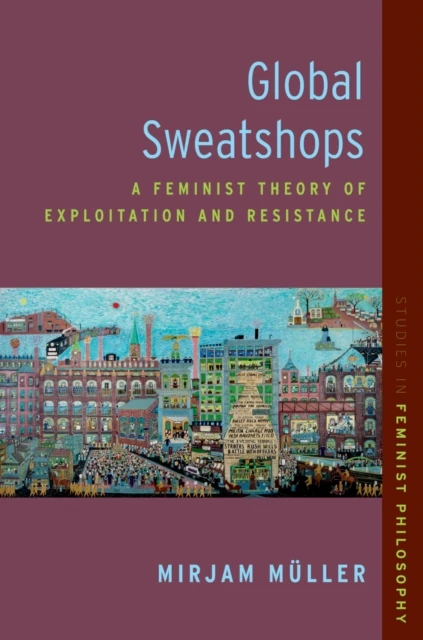
Global Sweatshops
A Feminist Theory of Exploitation and Resistance

Sweatshop labour characteristics
Sweatshop labour is characterized by low wages, long hours, and systematic health and safety hazards. Most of the workers in the sweatshops of the garment industry are women, many of them migrant women.
Questions posed by Mirjam Müller
Philosopher Mirjam Müller asks: Why are sweatshops so resistant to emancipatory transformation? How should we think about the relationship between class, gender, and race on the factory floor of sweatshops? What insights can be drawn from this for understanding the systematic relation between capitalism, gender oppression, and racial oppression? Does sweatshop labour raise distinct normative concerns compared to other forms of wage labour?
Müller's critique
Müller answers these questions by developing a feminist critique of working conditions in the global textile industry that draws on work in feminist, Marxist, post-/decolonial, and critical race theory. She shows how sweatshop labour is embedded in historically specific structures of global capitalism that raise unique normative concerns. The book provides a normative and practical account that highlights spaces of resistance, as well as the responsibility of actors implicated in sweatshop labour relations to work towards structural change.
Analysis and conclusions
Based on this analysis, Müller argues that sweatshop workers are structurally vulnerable to exploitation in virtue of their position as gendered, racialized, and migrant workers within global supply chains. While this exploitation benefits powerful actors along global supply chains, it also creates spaces of resistance and structural transformation.


