$185.99
Global Perspective on Contaminants in Groundwater
Assessment and Vulnerability

Overview of Groundwater Contaminants
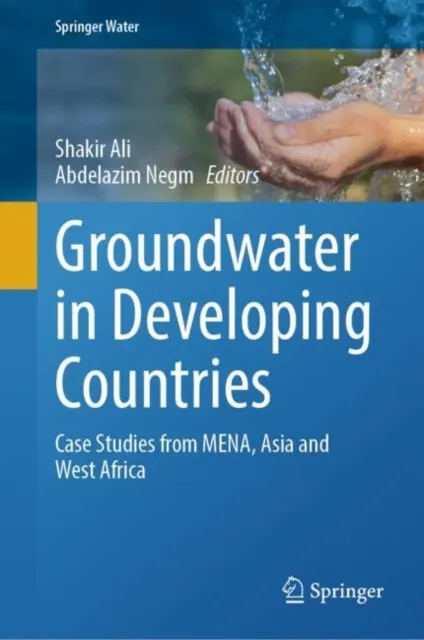
The book presents a comprehensive overview of various contaminants in the groundwater. The book delves deeper into case studies from MENA, Africa, and Asia regions. Groundwater in these countries is primarily used for drinking and is often consumed without any prior treatment. Thus, millions of the population are primarily exposed to various waterborne diseases. Hence, understanding the contaminant's sources, pathways, and mechanisms of release into the groundwater can unhide various aspects of pollutants. This book will help understand groundwater contaminants across MENA, Africa, and Asia.
Section 1: Groundwater Contaminants in MENA
Divided into three sections, the first section discusses groundwater contaminants in the MENA (Middle East North Africa), Morocco, and Egypt Regions. Contaminants such as heavy metals, organic and inorganic pollutants, and various other geogenic and anthropogenic contaminants were covered. Case studies are presented in this section to understand groundwater contaminants better.
Section 2: Contaminants in African Regions
The second section comprises other African regions. Broadly, the section delved into case studies from Nigeria, Cameroon, Djibouti, and Madagaskar.
Section 3: Groundwater Contaminants in Asia
The third section discusses groundwater contaminants in Asia. It discusses case studies from Turkiye and India.
Intended Audience
The book help readers understand numerous contaminants from MENA, Africa, and Asia. It is also immensely useful to students, researchers, stakeholders, concerned NGOs, hydrologists, etc.